Views from the Top – Follow Your Art Part II
Alistair MacQueen is an author, editor, and communications consultant based in London. Agostina Schenone is an Argentinian photographer who has lived in St. Moritz for six years.
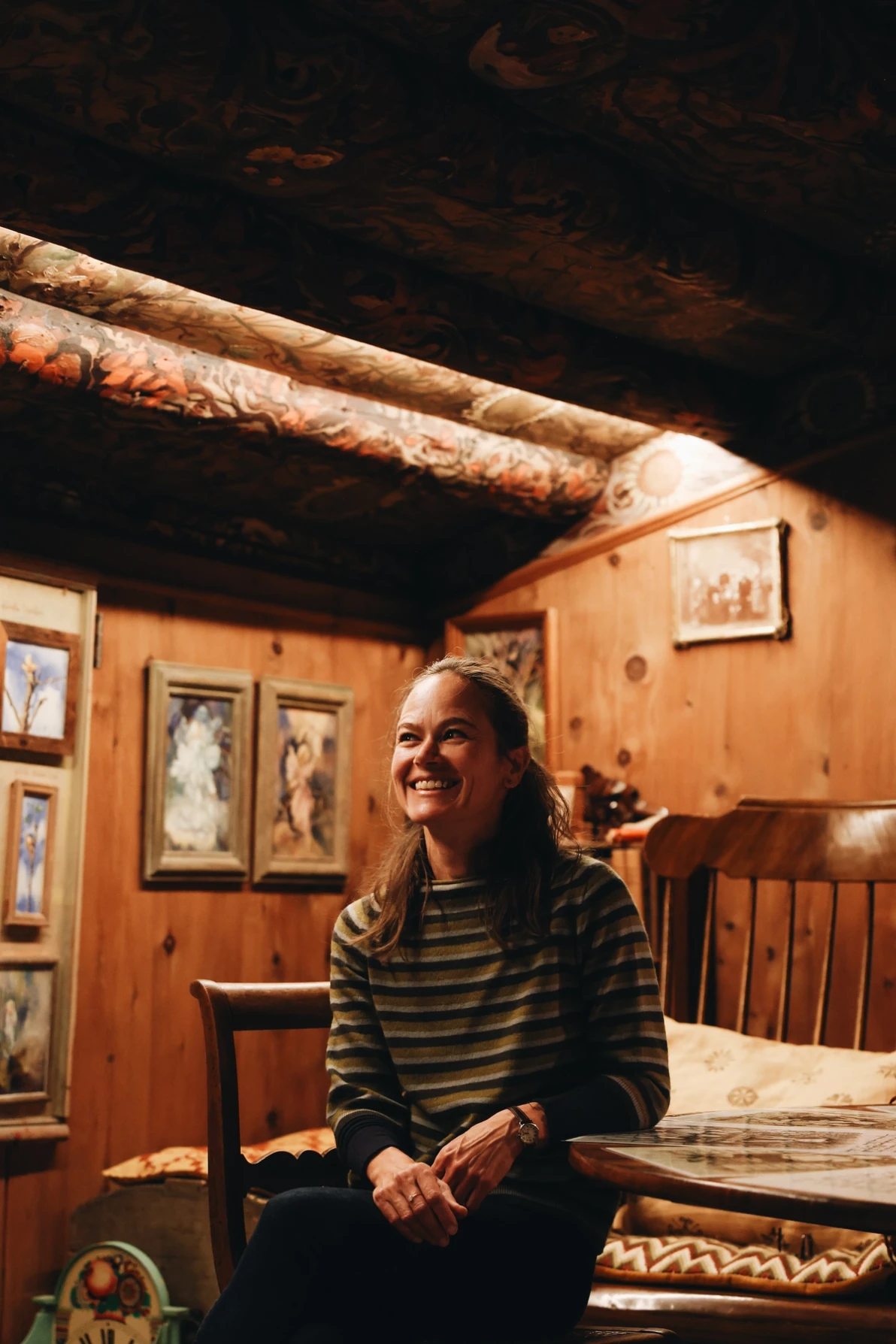
Christine Keller – Mili Weber Museum
The Mili Weber Museum needs a dedicated and knowledgeable individual to look after the vibrant and historic works on display here. Its director, Christine Keller, has a deep background in art conservation and restoration, so is well suited to ensuring that the illustrator’s passion for the natural world at this magical site can be visited and adored for more decades to come.
Describe your journey to the museum for us?
I'm a conservator and restorer by education, and previously lived in Bern where I worked at the Swiss National Library for more than 10 years. Before coming to Engadin, I also completed further training in museum work at the University of Applied Sciences of the Grisons. After the birth of my daughter, I initially worked as a cultural manager for the Hotel Laudinella. I really enjoyed the work because I love interacting with people and find cultural events personally enriching. When the position of director at the Mili Weber Museum became available, I decided to take on this challenge and return to working closer to my original field of activity, the visual arts. I have been working here for two years now.
What do you love about working at the museum?
I am trying to fulfil the foundation's purpose, which is to preserve the house as a total work of art and make it accessible to the public. In line with the foundation's purpose, I see it as my duty to preserve the life's work of Mili Weber and her family and to safeguard it for future generations. It is a pleasure for me to introduce people to Mili Weber's work and message and to see how they are touched by her art and her authentic, nature-loving way of life.
What makes St. Moritz and the Engadin such a great place for artists and creatives in your opinion?
The colours, the light and the nature around here are very special and inspiring, especially when it is so high up at 1,856 metres.
What does the Mili Weber Museum offer that other museums don’t?
The Mili Weber Museum is idyllically situated in the forest above Lake St. Moritz. The house was built in 1917 by Mili’s brother Emil, who was a cabinet maker and architect. Inside the house, loving details bear witness to his creative and craftsmanship skills. Finally, Mili Weber transformed the house into a fairytale-like work of art by artfully painting furniture and ceilings with natural elements, furnishing dollhouses and decorating the walls with her paintings. When visiting the house, you will be enchanted by this fairytale world and enjoy a wonderful view across the mountains and the lake.
Who would you most like to see walk into the museum?
I wish the singer-songwriter Sophie Hunger would visit our museum and be inspired to write a song. As a person and an artist, Mili Weber and she are certainly very different from each other, yet I see some similarities. Mili Weber was primarily a visual artist, but she also composed and sang, like Sophie. They are both women who live their art and express their own world. They are both multi-talented, with an interest in politics and philosophy. When you enter Mili Weber’s house, you are enveloped by a very special atmosphere, and the same thing happens to me when I listen to Sophie Hunger’s music.
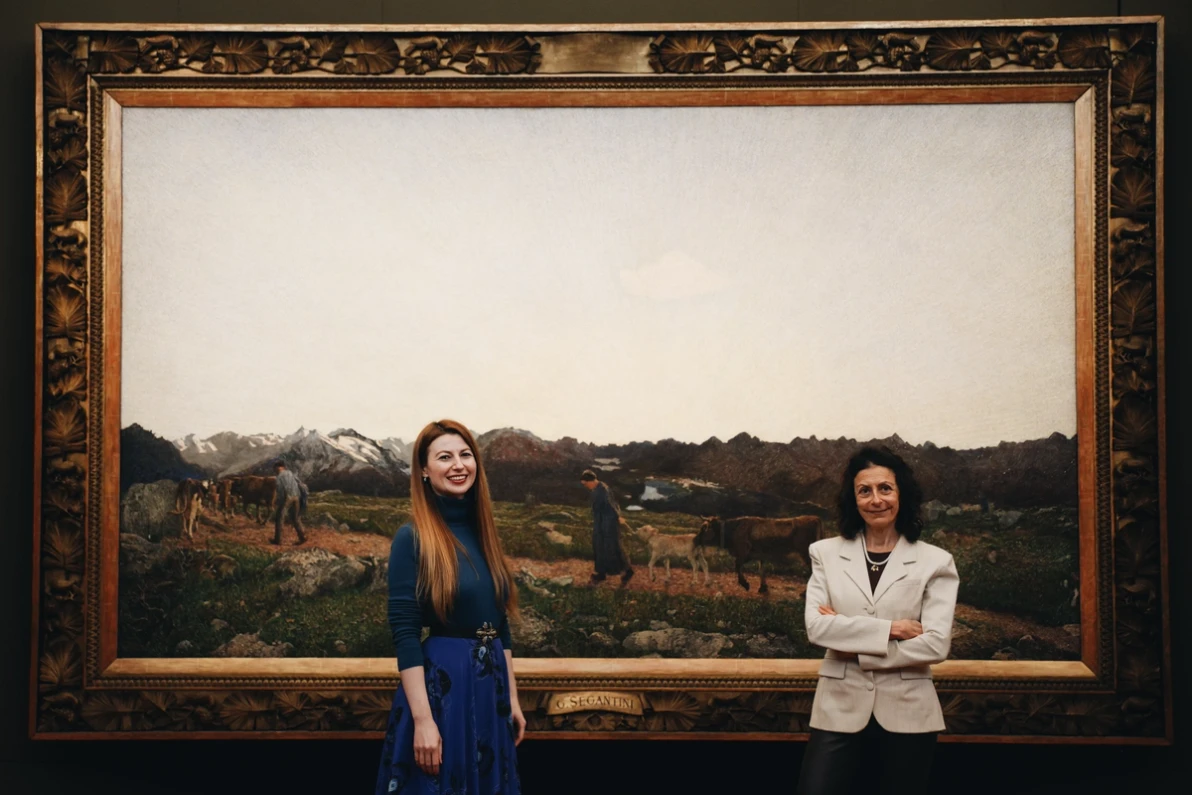
Claudia Stoian and Mirella Carbone – Segantini Museum
Claudia Stoian and Mirella Carbone are the co-directors of the Segantini Museum, where their responsibilities include overseeing the day-to-day operations of the museum, organising events, running its website and much, much more. They took time out from their busy days to tell us what it’s like working at one of St. Moritz’s most famous museums.
What is special about the Segantini Museum and why is it definitely worth visiting?
Claudia: For me, the most fascinating aspects are how it came to be, and its architecture. We are often asked if it used to be a church because of its large stone-covered dome that was envisioned by Segantini himself. The original plan included a large domed building that would have housed a panoramic painting of the Engadin. Unfortunately, this had to be scaled down due to high costs, and so Segantini redesigned the project to be a triptych, a monumental artwork depicting the cycle of nature, life and death. He passed away high on Schafberg mountain before it could be completed, so the museum was built in his honour, and the large dome now houses the Alpine triptych.
Mirella: It’s home to the most comprehensive and significant collection of works by Segantini, who is one of the world’s great masters of Alpine painting. This museum is really special because it was originally designed not just as a place to exhibit art, but as a monument for remembering and honouring the artist who died so unexpectedly in 1899, aged 41. It's like a walk-in ‘mausoleum’ for him. The unique dome shape also reminds us of the Pantheon in Rome. The building also points eastwards towards the Schafberg mountain, where Segantini died.
The museum is a small but internationally renowned institution. Why are there two directors here instead of one?
Claudia: Although we are a small institution and a small team, we have a sizeable collection of extremely valuable artworks, with similar responsibilities to larger museums. It used to be led by one director who oversaw the financial management, administration, curation and care of the collection. However, the Board of Directors recognised that these duties naturally divide into the practical day-to-day operations, and stewardship of the collection and realisation of exhibitions. It was then decided to adopt a dual directorship, which I think has proven to be quite effective. Mirella and I collaborate very closely and continually seek one another’s counsel.
Mirella: Yes, it may sound strange, but I am glad that the Board of Directors decided to adopt a dual directorship. I really enjoy not having to take responsibility for all the areas, but instead being able to concentrate on artistic issues and curatorial tasks.
What do you both particularly like about your job as directors?
Mirella: Because we’re a small team, we have many different areas of responsibility. I like that, as it makes my daily work very varied and exciting. I take care of the maintenance, but also the expansion of our collection through new acquisitions, which involves finding sponsors for those and for exhibitions. I’m also required to answer the numerous specialist questions about Segantini, the artist, and his work that we receive from the public, as well as conceiving and implementing special exhibitions, handling loan requests from other museums, and personally accompanying the works that are loaned out.
Claudia: My favourite part is interacting with the visitors and seeing the profound effect the artworks have on them. It’s such a joy to see people arrive having never heard of Giovanni Segantini, only to leave utterly captivated, having fallen in love with his works. Those who already know his paintings return again and again to see them. A couple of years ago, one visitor came all the way from Hamburg just for our museum. They spent a day and a half here, most of it upstairs in the domed hall with the Alpine Triptych, and left visibly moved. Moments like that stay with you and it’s very touching to know that our works have stirred so many emotions, which is why we do our best to create the best possible experience for our visitors.
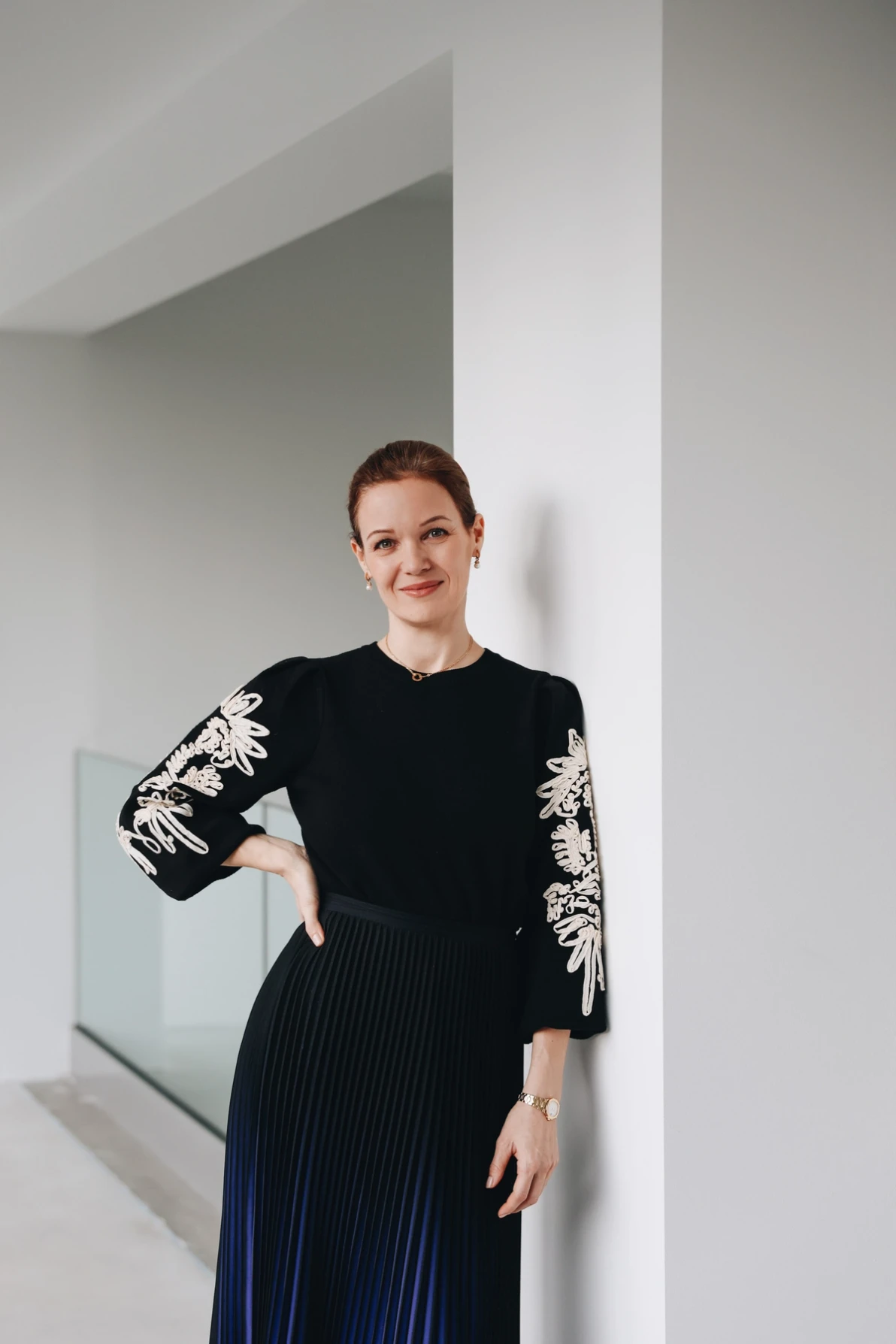
Lucia Waldner – Galerie von Opel
The newest addition to the St. Moritz gallery scene brings together a diverse and international display of contemporary art that encompasses several geographies and practices. It’s down to gallery director Lucia Waldner to unify a high-quality mix of local and international artists so that she can create a hub of creativity and conversation in a capacious and light-filled 360m² space spread across two levels.
Tell me about the moment you opened Galerie von Opel?
From day one, in the winter of 2024, it was important for us to become a space for established and emerging artists with a special focus on those connected to the Engadin region through heritage, material, or inspiration. We were really proud to join the regional cultural space and, due to the international character of the area, to become a part of a much wider, rich cultural dialogue.
What makes St. Moritz such a creative and receptive place for art?
It assembles a unique mix of people who are genuinely curious as well as culturally engaged, which includes locals, international visitors, and artists. There’s a seriousness about art here, but also an openness to new forms and perspectives. The physical setting adds another layer. Nature, and the mountains especially, offer a scale, clarity and permanence that’s increasingly rare. Artists don’t come here to escape the world, but instead to see it more clearly. It is inspiring to be a part of that.
Do you prefer to show local artists or established names?
We don’t really think along those lines. The dialogue between regional and international voices is essential for us. A young artist from the Engadin experimenting with pigment and shadow may appear alongside a sculptor with decades of museum presence. We have shown internationally established artists with a substantial following as well as small-scale creations of local artists. What matters is resonance, how the works speak to one another and to this place.
What’s the most exciting thing about your work?
Definitely the transformation of the gallery space with each exhibition. Watching the space reinvent itself every time is profoundly rewarding, from the gravity of our Hans Josephsohn sculptural exhibition to the different shades of blue in the large-scale works of the Swiss-Italian painter Arnaldo Ricciardi. Currently, we are showing the works of 12 local and international artists that harmoniously coexist and complement each other, all the way from the poetic painting of Not Vital, through the colourful paraffin plates by Laura Bott and the feather-light “Trapped Dreams” installation by Mazina Schmidlin-Könz, to name just a few.
What three words best describe your gallery?
Creative, harmonious, reflective.
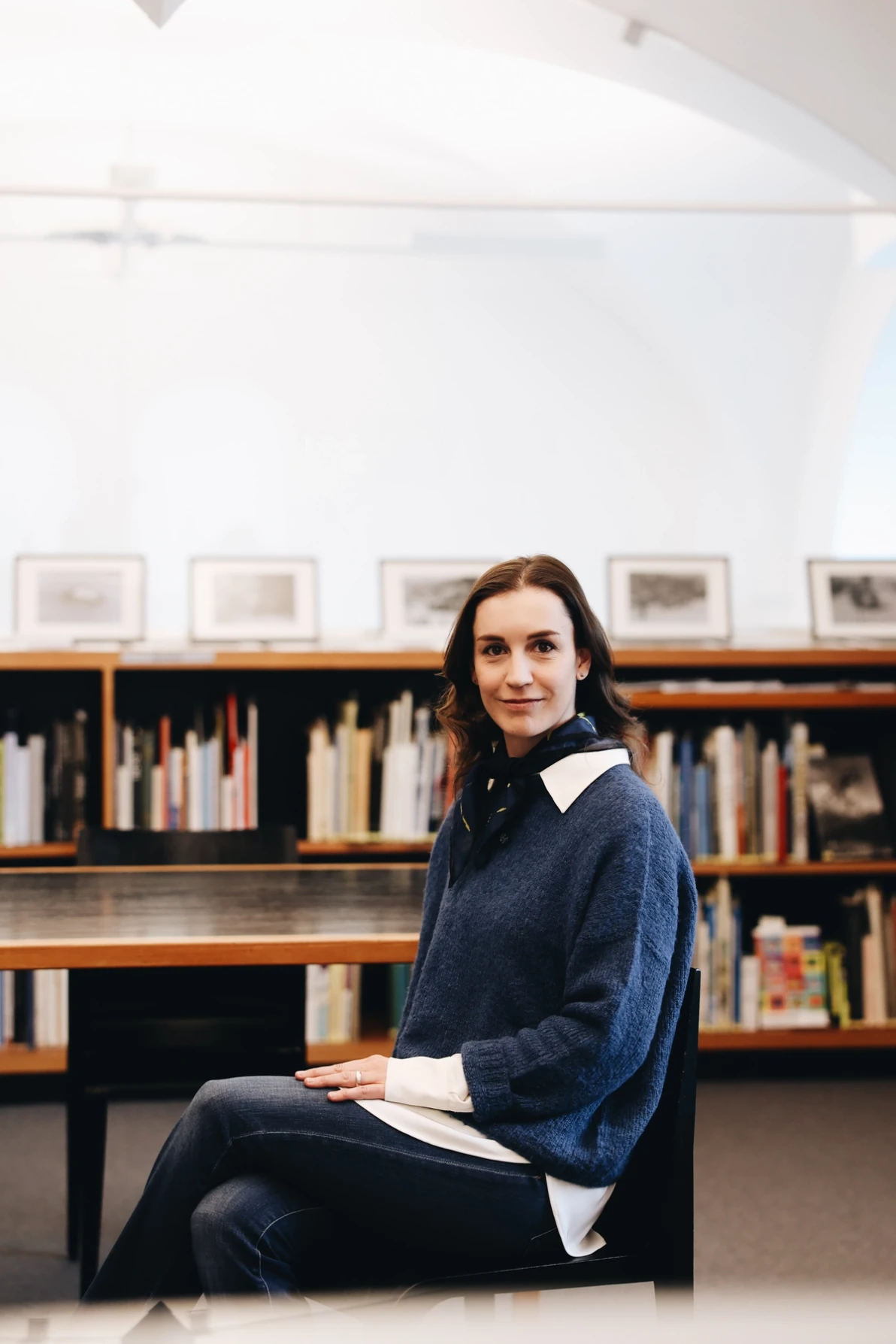
Lisa Degiacomi – Documentation Library St. Moritz
Lisa only began working as the new head of the Bibliothek St. Moritz in November 2025, and has a background in history, art and perhaps, most appropriately, books. Before her working life in St. Moritz, Lisa studied history and literature at the University of Zurich and completed further training in museology, which gave her some insight into the curatorial aspects of the profession. She began working as an operations assistant for the Museum Engiadinais on the Via del Bagn for two years, and was then employed after the birth of her son at the village’s premier book and stationery shop, Wega Buchhandlung, before she took up her role at the library.
Tell me about the moment you knew that you wanted to work with historical artefacts?
We did a lot of history during my university studies, and most of our time was spent in classrooms, listening to lectures and writing, with only the occasional field trip. I loved the rare moments when we were able to see historical objects in real life, and I wished we could do that more often. I started to wish I would have studied archaeology, because usually when we went on these trips, the archaeologists were the only people who could tell me about the objects, which I found so fascinating. That's how I got into work like the Museum Engiadinais, which has a lot of really fascinating objects, from the past 150 years to the Bronze Age!
What does the library offer to the people living and visiting in St Moritz that other museums or galleries don't?
It's not like a museum, where you go to look at the objects they're showing. The library is a place, especially in the archives on the upper floor, where people can come and do their own research about their families, their ancestors, the buildings they live in, the hotels, the Saint Moritz Bobsleigh Club, smaller clubs, the choir, or the entire history of St Moritz! So the people bring these subjects to us. We're not just giving it to them, but we’re in a position where we can actively help broaden their knowledge, and give them their memories, too.
What kind of artefacts or pictures does the library contain?
We have approximately 50,000 pictures of St. Moritz and the surrounding area since photography started. So far we only have 20,000 digitised, which anyone can access via our website. Just put in a word and see what comes up. We also have more than 200 year-old film rolls that can be watched at the library, and those are very delicate. One thing I am doing is trying to speed up the digitising of them, because in a few years, we will not be able to watch them anymore because they will be ruined or will have disintegrated.
How will your experience determine what the library will be involved with in the future?
What I also want to do is show the work behind the archive and what happens to documents before they’re put away in the archive where no one sees them for the next 50 years. I find this preservation process really interesting, all of the work and technique to keep the papers and historical books alive. I want to start an interactive exhibition that’s open to everyone to show them what’s involved, how they can contribute to it and ensure they are a part of the village’s history as well.