Flying High on top of the world
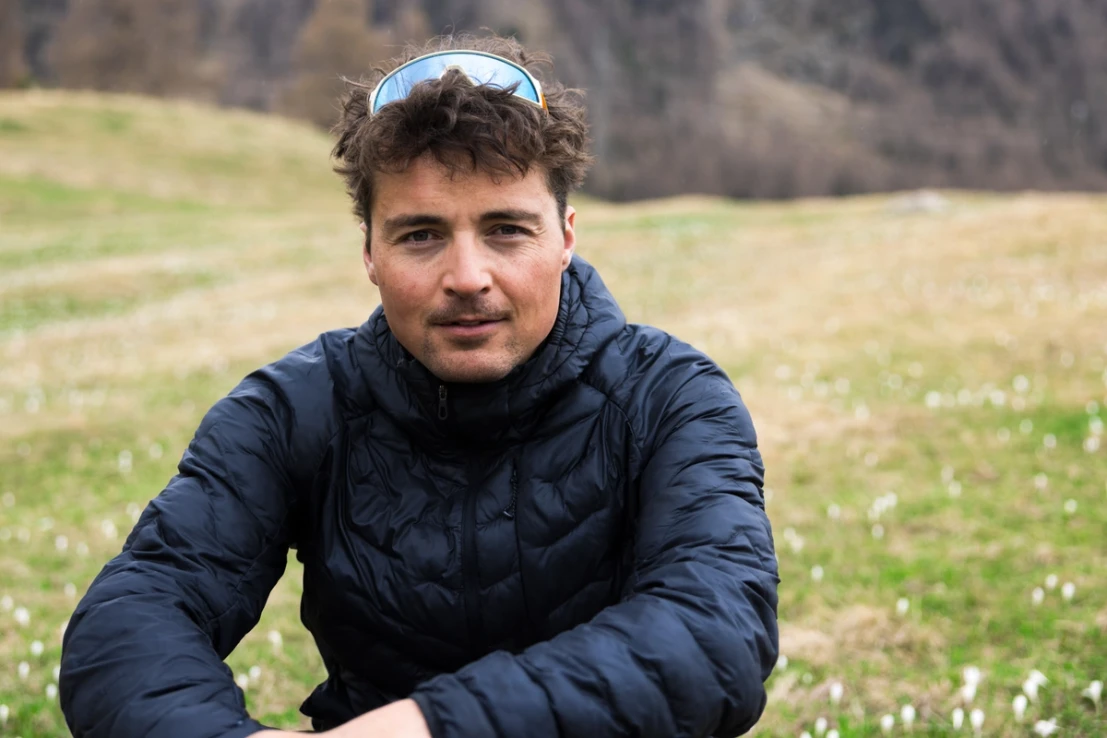
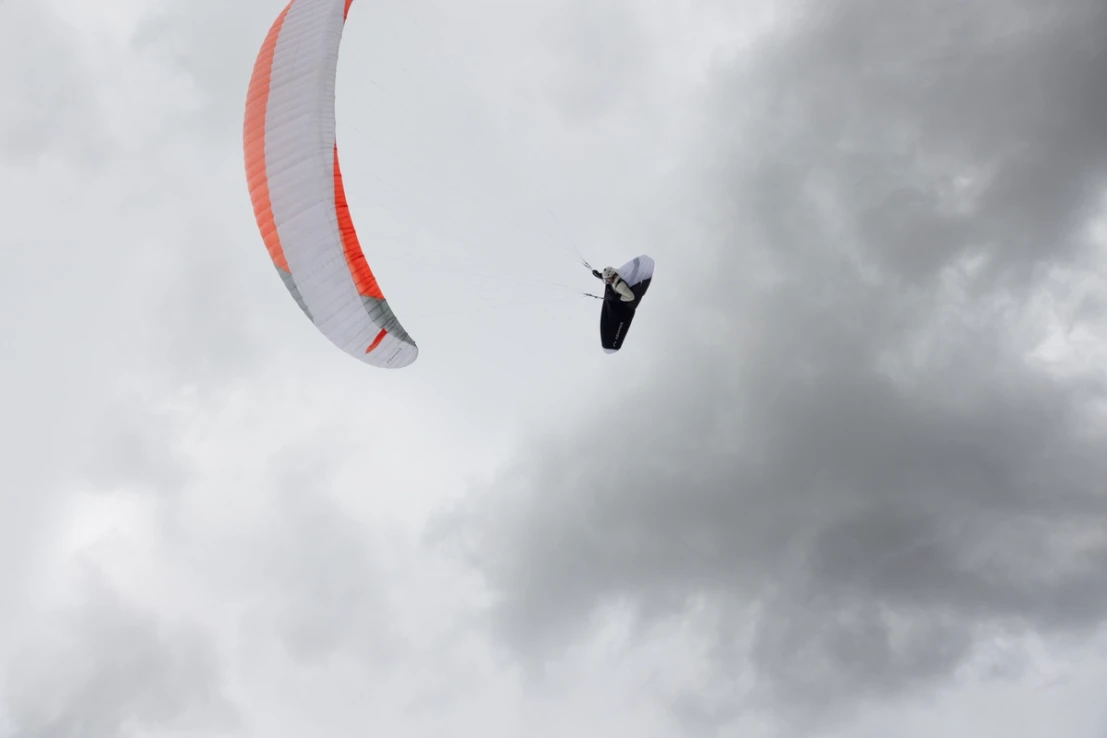
Romano Salis
Romano, how was your first flight over the Engadin?
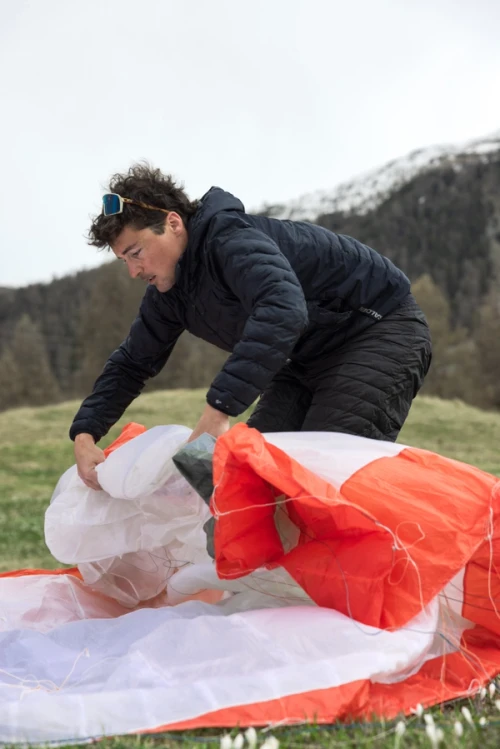
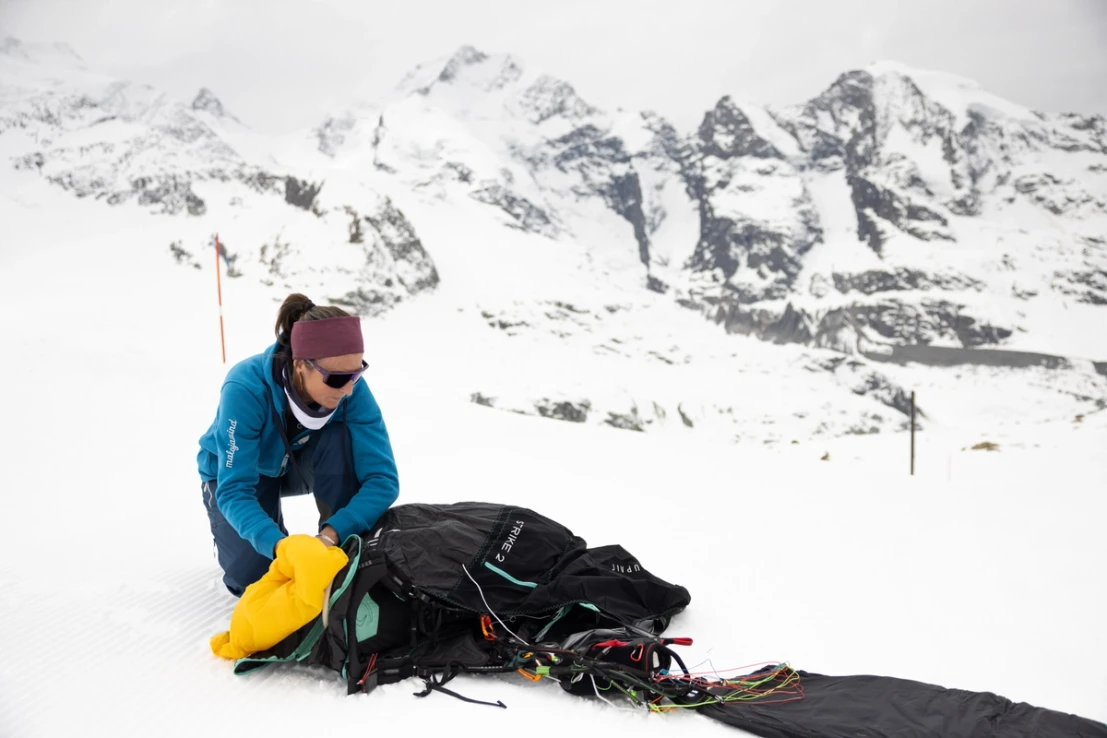
My first flight over the Engadin was from Piz Corvatsch. I travelled up by cable car, feeling quite nervous as I didn't know what the wind conditions would be like. Whether calm or turbulent – in this place, experience is essential. Up at the top station, I laid out my paraglider, carefully checked my gear, and assessed the wind direction – it was perfect: a headwind, ideal for take-off.
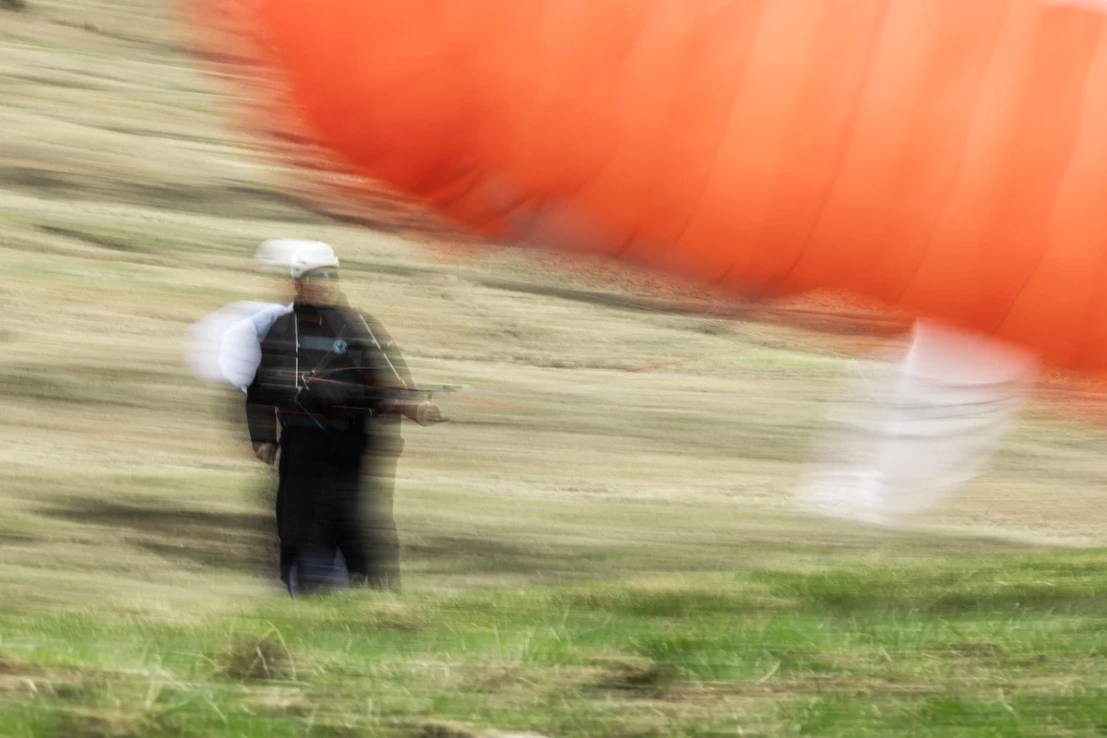
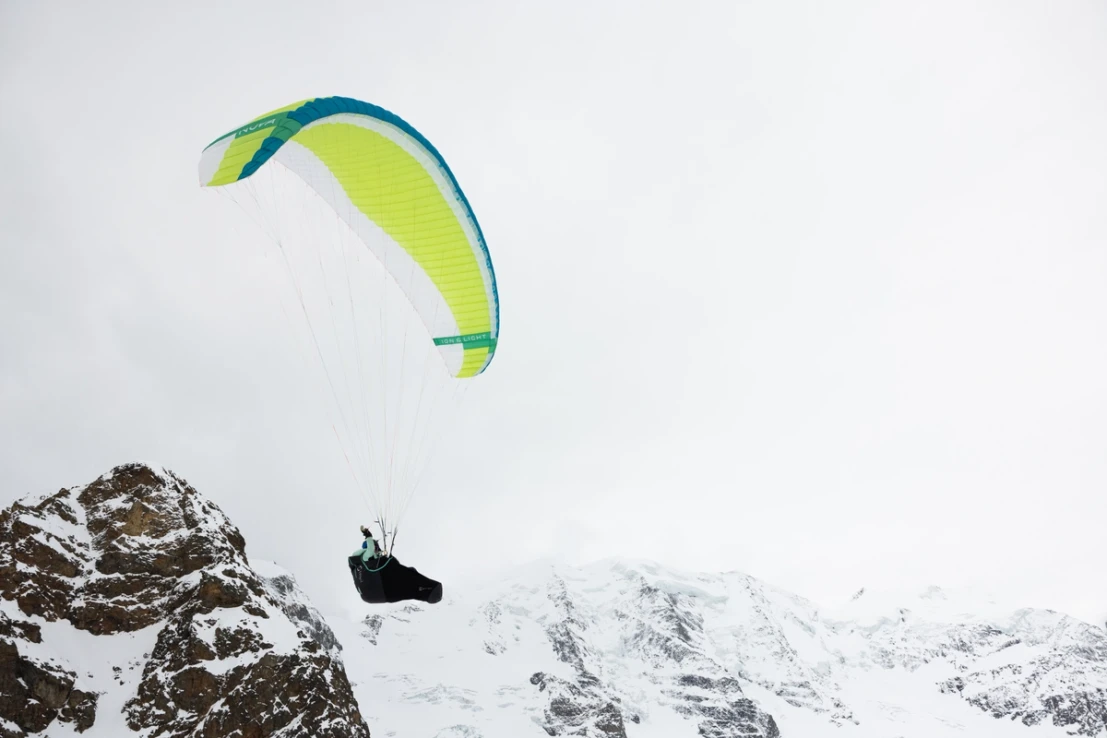
Then the take-off – straight into the clear Engadin air. To my right, the Bernina range; to my left, the wide valley. Although I was tense, the view was absolutely breathtaking. I flew down into the valley at around 25 to 30 km/h, which gave me time to take in the scenery. About 15 minutes later, I prepared for landing. Timing is everything – when you get it right, it’s an incredible feeling. And that’s exactly what it was: an overwhelming sense of joy – the first of many.
What makes flying in the Engadin particularly challenging – or particularly magical?
For me, the Engadin is one of the most beautiful places in the world for paragliding - but it’s also one of the most demanding. Especially in spring and summer, the valley wind systems can be very strong, and you need to be able to read and understand them. At the same time, the landscape is unique: the chain of lakes, the golden larches in autumn, the clear view in winter - four seasons, each magical in its own way.
It is this change of perspective that makes flying here so special; you don't see the world from a hiking trail or a mountain summit, but from the sky. You can soar up to 4,000 metres above sea level and discover new valleys, unfamiliar places. I love capturing those moments with my camera - whether in spring clouds, in the evening light or in the early morning. There’s nothing else quite like it.
How important is the flying community here to you? Is there a moment that you particularly remember?
The community here means a lot to me. Some of my best experiences have been cross-country flights with a friend – flying from point A to point B, often covering long distances. On those flights, you need to find so-called thermals and doing that as a pair often works better and more efficiently.
There's one moment I'll never forget: a flight with a friend. We took off from Piz Corvatsch and headed towards Italy. Then we turned back towards Austria, and for the grand finale, we soared over Piz Bernina, bathed in the golden evening sun. We landed in Surlej and celebrated the day with a beer. Experiences like that feel almost surreal – it's hard to believe that it's all possible with just a piece of fabric!
Is there an experience in the air that you’ll never forget?
For me, it's not just one moment, but hundreds that I will never forget. Like the first time I flew over Piz Badile, or the first time I flew over the Biancograt of Piz Bernina. These experiences evoke strong emotions, and I will carry them with me for the rest of my life.
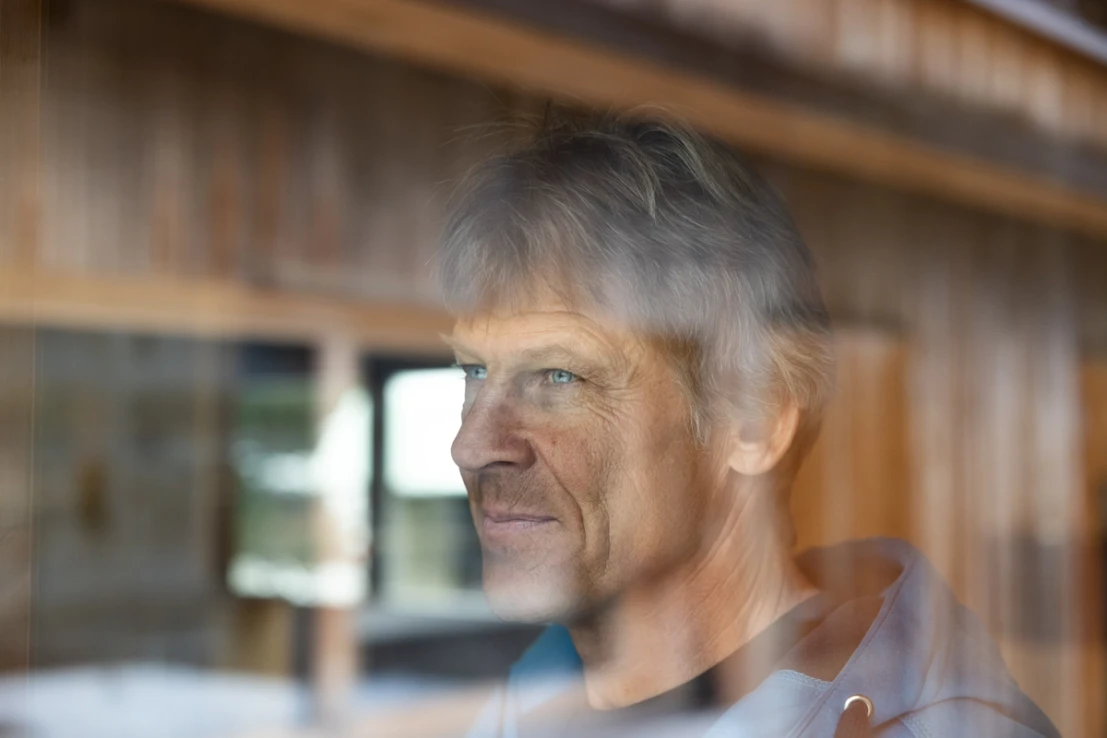
Peter “Pesche” Käch
Pesche, how was your first flight over the Engadin?
I first flew over the Engadin in July 1990 – 35 years ago! I took off from Alp Languard and flew alongside the slope. I was surprised at how easily I could stay at the top and continue to climb. The feeling of lightness was incredible.
However, I quickly realised that staying up was only half the battle — getting back down could be just as challenging. It took a while — and a few nerves — to get back down. My landing at Pontresina railway station was a bit rough, too. Nevertheless, it was a wonderful experience that left a deep impression on me. Apparently, I was hooked, because the very next day, I took off again from Alp Languard.
What makes flying in the Engadin particularly challenging – or particularly magical?
Unlike in the Jura or the Bernese Oberland, we usually take off at over 2,500 metres here in the Engadin, and over 3,000 metres on the Corvatsch, for example. As a result, the air is thinner, you are often exposed to high-altitude winds, and the terrain is complex — we are right in the heart of the Alps, after all, with strong influences from both north and south.
To fly safely here, you need to be well prepared, respect the above factors and, ideally, have some experience. For us locals, paragliding is no more dangerous than mountain biking — it's just a different way of getting around.
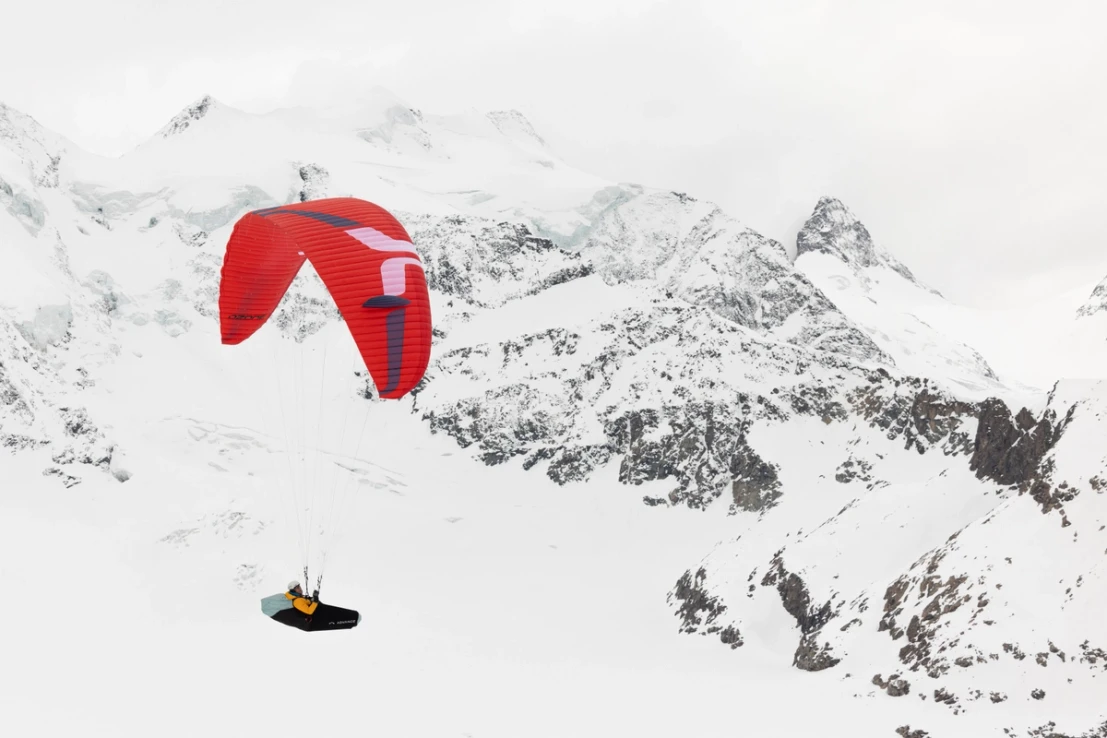
The best thing is that we don't just take off high; we also fly high. Often, we fly over 4,000 metres, above snow-covered peaks, over the Bernina group, and enjoy views of the Ortler massif, the Bernese Alps, and Monte Rosa. The feeling of being above it all is hard to describe. It really is the top of the world.
How important is the flying community here to you? Is there a moment that you particularly remember?
The community here is noticeably different from those in other flying areas. Perhaps this is because we are a little more out of the way. When you stand at the take-off point, you will usually see familiar faces, often locals. Anyone who comes from outside, whether on holiday or working, is made very welcome.
You often travel together until you reach the take-off point, and initially you remain close together in the air. Afterwards, however, you each go your own way, sometimes spending hours alone. Then you meet again at the landing site and tell each other all about what you’ve been doing. Paragliding is less of an organised team sport, but it creates strong bonds. Even if you don’t see each other often, there is an immediate bond of trust. There is a strong, unspoken fellowship – and if anything happens to someone or something goes wrong, it doesn't go unnoticed. We just stick together.
Is there an experience in the air that you’ll never forget?
Over nearly 40 years, I have had lots of special experiences. But one of these really stands out: after a long cross-country flight, I flew far out of the valley with the intention of flying back again. On the return flight, I was able to orientate myself the whole way using the white Bernina Group as a reference point. When a surprisingly productive thermal finally allowed me to soar over the peaks again shortly before sunset, I realised the plan was working.
Landing back where it all began after a long day of flying — sometimes eight, nine or even ten hours in the air, covering 100 or perhaps 200 kilometres — is indescribable. The final approach to a familiar landing site, accompanied by calming evening thermals, is one of my favourite experiences ever. Of course, there are other things that stay close to my heart, such as flying over the Biancograt for the first time in the early morning. But returning home after such a long time in the air is something very special.
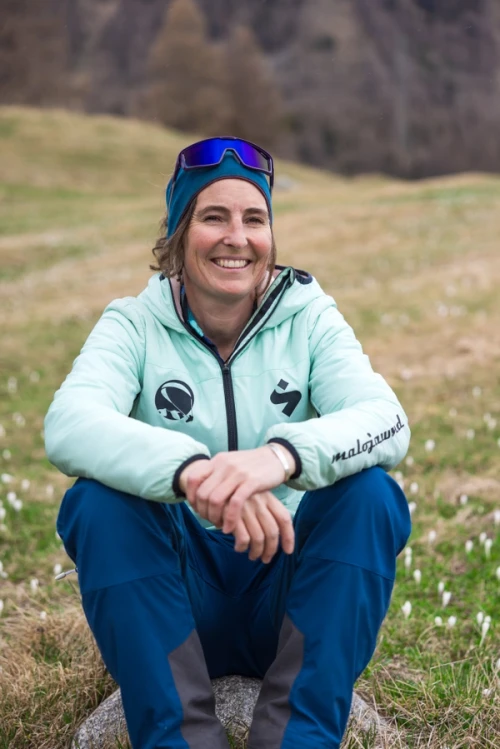
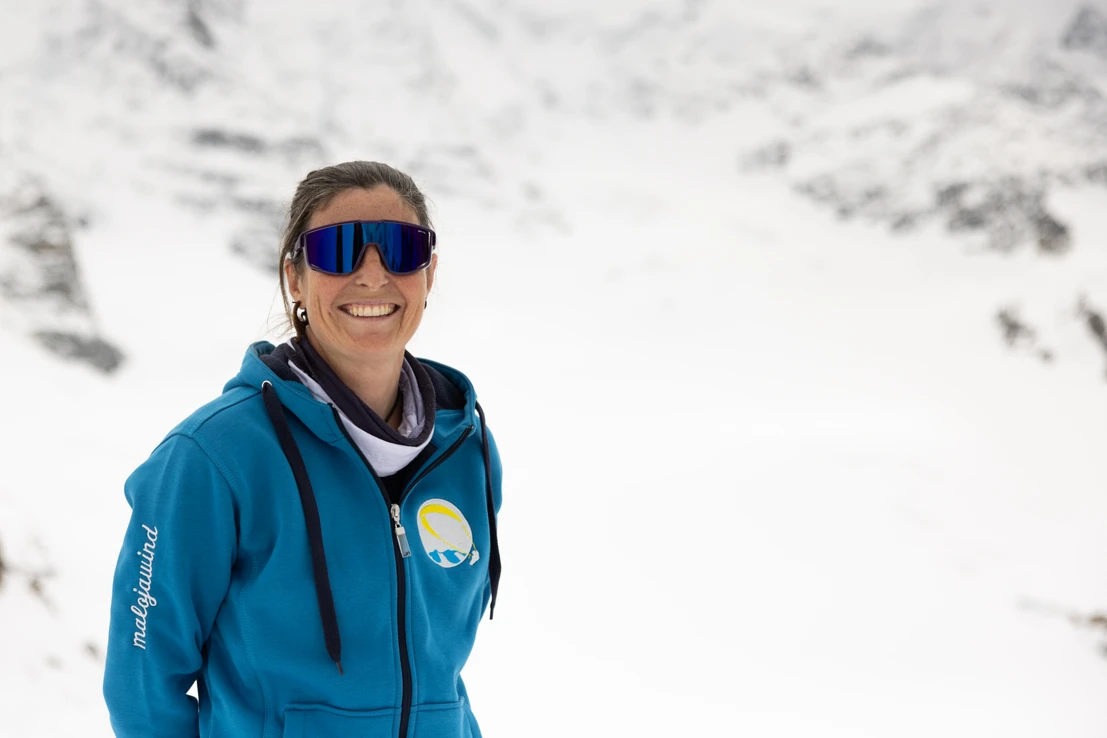
Gabi Schmutz
Gabi, how was your first flight over the Engadin?
I did my first paragliding flights in tandem, mainly with ‘Pesche.’ The more I flew with him, the more I was fascinated by the impressive landscape from above - and the fact that you can cover long distances without an engine. Once, we were in the air for three and a half hours, taking off from Muottas Muragl and flying up to the Biancograt before continuing to the Lower Engadin. My first solo flight was also from Muottas Muragl in winter. The feeling of freedom I experienced, gliding alone above the snow-covered landscape with my paraglider and landing safely at the bottom, remains a wonderful memory to this day.
What makes flying in the Engadin particularly challenging – or particularly magical?
Often you are completely alone at the take-off site and there are no other pilots to guide you or ‘show’ you how to take off. You must decide for yourself: Should I take off or not? Where exactly is the best take-off point? Launch sites are rarely easy either. They are not gently sloping meadows; they are covered in rocks or scree - like on Corvatsch. Space is often tight, the launch is technically demanding and you need experience and good judgement of the conditions. On top of that, there is a pronounced valley wind system in the Engadin. The Maloja wind in particular can become very strong very quickly. Dangerous turbulence can then develop behind ridges, trees or forests. When the Bernina and Maloja winds meet at Punt Muragl in the afternoon, landing can sometimes be almost impossible.
How important is the flying community here to you? Is there a moment that you particularly remember?
As there aren't many pilots, you often meet each other at the launch site or in the air. Some you already know, others you get to know while flying. The mix of generations is particularly exciting: young and old fly together here, and you can learn from their different experiences and perspectives.
One particularly memorable experience was when a colleague returned after breaking her foot. After her long absence, she was a little unsure at first, especially during take-off at Muottas Muragl, where she had broken her foot. Davide helped her regain her confidence by doing a tandem flight with her from up there. When she took off again with the solo parachute, the whole community helped and supported her, making her feel secure. It was great to see how strong the team spirit is here, and how willing we are to help each other.
Is there an experience in the air that you’ll never forget?
For me, one of the most beautiful experiences is circling in the thermals alone with an eagle, several eagles, or even a vulture. I experienced this last winter on Muottas, when I flew with two young eagles for 20 minutes in the same place. These birds are so relaxed, it's impressive. For me, it really is one of the most beautiful and fascinating experiences.
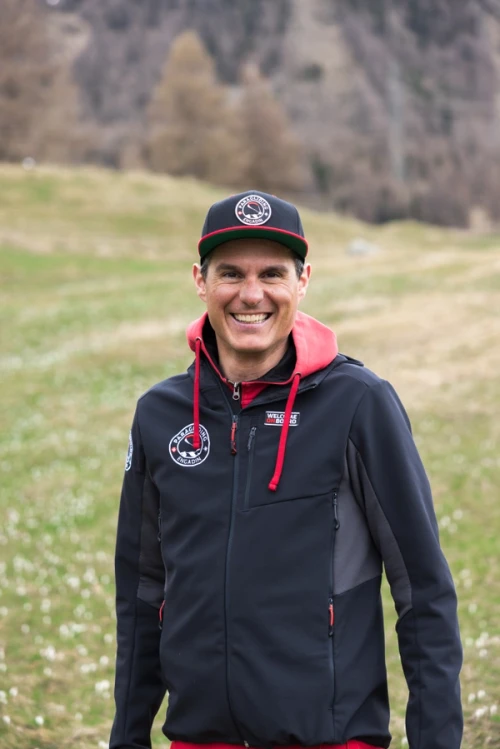
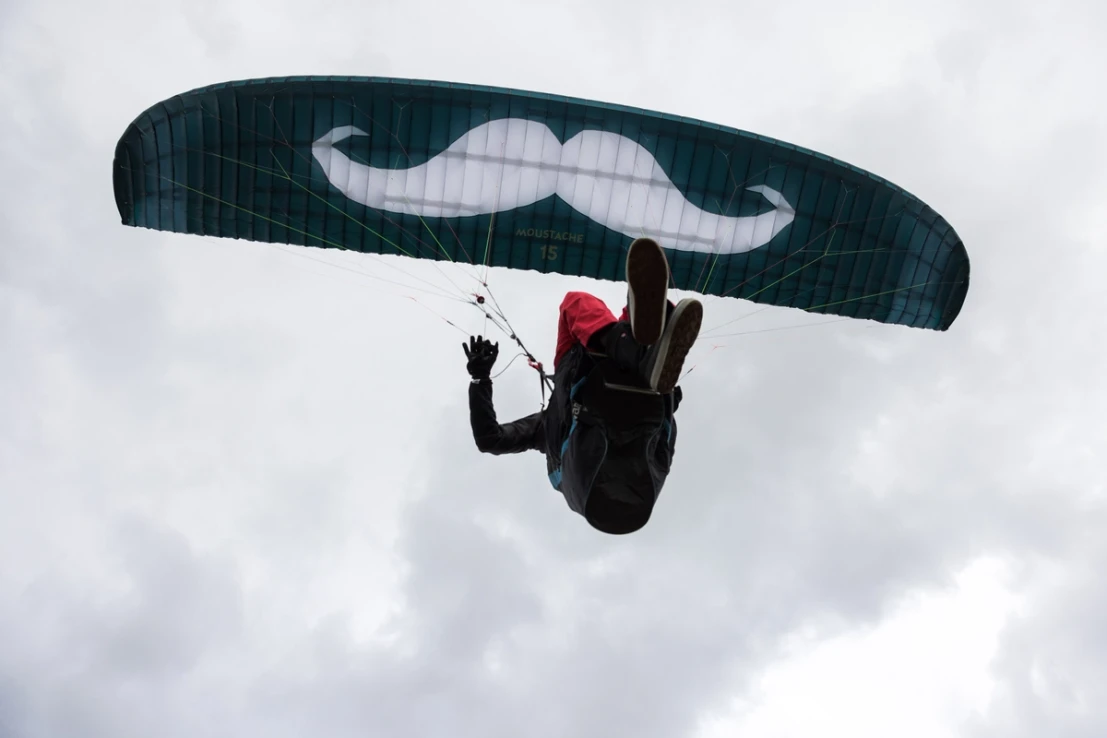
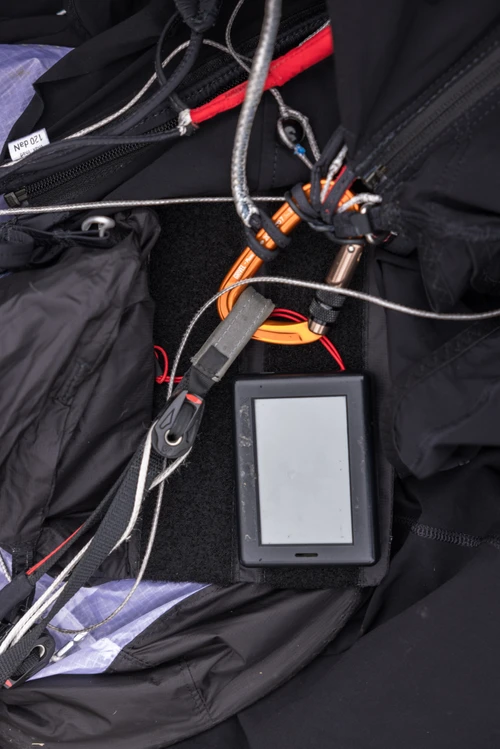
Davide Grosina
Davide, how was your first flight over the Engadin?
I took my first flight over the Engadin on New Year's Eve in 2010. While everyone else was getting ready for a party or going skiing, I was soaring over the frozen lakes. From above, everything looked lively yet peaceful, almost magical. I had known the Engadin since childhood, but this bird's-eye view was completely new to me — seeing the valley from above was incredible. At that moment, I felt an urge to share this experience with others and decided to learn to fly tandem. A few years later, I obtained my tandem licence, and it became my job. Since then, I've been able to show others what I saw for the first time. Even after more than 5,000 flights, I feel the same indescribable happiness as I did the first time.
What makes flying in the Engadin particularly challenging – or particularly magical?
Flying in the Engadin is both challenging and magical. Even before I get out of bed, I look out of the window in all directions, trying to sense the mood of the wind today. The first and most important step is getting a sense of the wind. Then I open all my apps, check the webcams in every corner of the valley, and analyse the wind speeds – I want to know exactly what might happen in the Engadin today. Is it the Maloja wind or a north wind? Will clouds build up, or are they already there? After 15 years of flying experience, I have developed a feel for the valley. The Engadin is almost like a living entity — it often behaves differently to what the forecasts predict. Its complex wind system demands respect. It's best to listen to the valley and accept what it has to offer, rather than trying to force it. Ultimately, nature determines when and how we fly.
How important is the flying community here to you? Is there a moment that you particularly remember?
Sometimes I'm alone in the air for ten hours, completely by myself, almost like in meditation. On other days, flying is more of a team sport. We know each other, recognise each other by the gliders, fly together and swap notes. We all have different backgrounds and feel comfortable in different conditions, whether they are calm or turbulent and whether we are high up or close to the ground. It is precisely this diversity that makes the community so valuable.
We had a wonderful experience once at Muottas Muragl in winter. We flew all day, taking off, landing and taking off again. At one point, the thermals suddenly disappeared - and within a few minutes we were all heading to the same landing site. We met up there again, grinning from ear to ear as we talked about our experiences.
Only we who were up there really know how it felt. It is a real pleasure to share that with each other.
Is there an experience in the air that you’ll never forget?
One of the most memorable moments of my life was my first flight over the Piz Bernina and the Biancograt.
I had to climb over 4,500 metres completely alone, far from any villages, roads or noise. Up there, it was completely silent. Even the variometer, which usually beeps to indicate whether you are climbing or descending, had fallen silent — the thermal had finished and there was nothing left but clear, still air.
I soared above the glaciers, looking down on Italy on one side and Austria on the other. For a moment, I felt as though I were on another planet, completely detached from this world. It's hard to describe, but that's exactly the feeling I'm still looking for today, again and again.
More than flowers: “Plus quam flores” by Gian Giovanoli at the St. Moritz Design Gallery•A house of many lives: Villa Beaulieu, formerly home to Klinik Gut•“I Contain Multitudes”: Light art in public spaces by Marinella Senatore•Paris has a new fragrance. And St. Moritz takes centre stage: PARIS–ST. MORITZ by CHANEL.•