Ebneter & Biel: The Art of Hand Embroidery
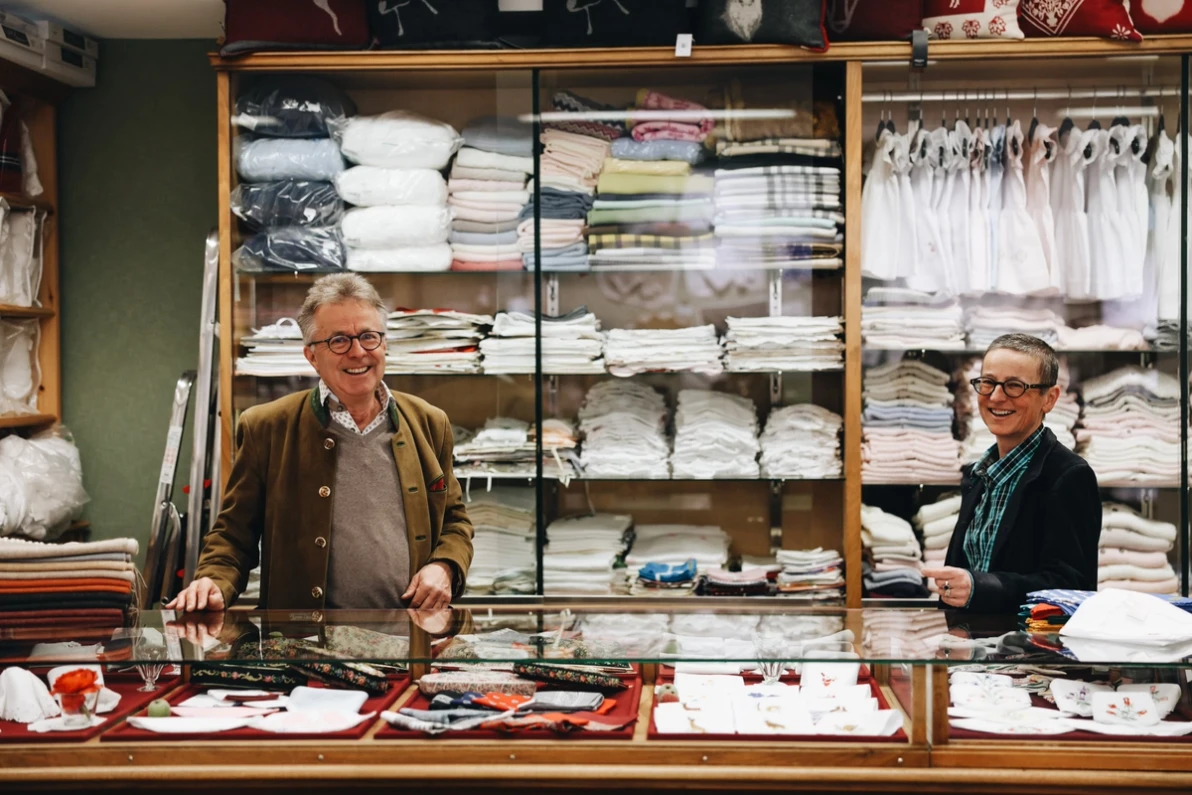
Craft makes more sense than ever in the industrial era we live in. In a world of mass production and uniform objects, those who appreciate things well done know that a piece by Ebneter & Biel is something different altogether. It is unique—in Christian Biel’s words “when we explain what we do, people see there is a heart behind.”
From his office in St. Moritz, surrounded by the papers, records, and memories accumulated over decades, Christian reflects on the history of a family business that has quietly moved through changing times while holding firmly onto its craft. Founded more than a century ago, the embroidery house has survived shifting markets, evolving tastes, and the gradual disappearance of hand embroidery across Europe. Since 1997, the company has been led by the fourth generation of the family, siblings Andrea-Rita and Christian Biel. Together, they continue to produce finely embroidered tablecloths, napkins, custom handkerchiefs, and bespoke textiles of every kind.
Christian sees these creations as a way of balancing contemporary aesthetics. In a time dominated by minimalism and industrial design, the softness and ornament of embroidery offer something more intimate. Vintage-looking fabrics are now increasingly embraced by younger generations who seek warmth and character in their homes—objects that counterbalance the sleekness of modern interiors.
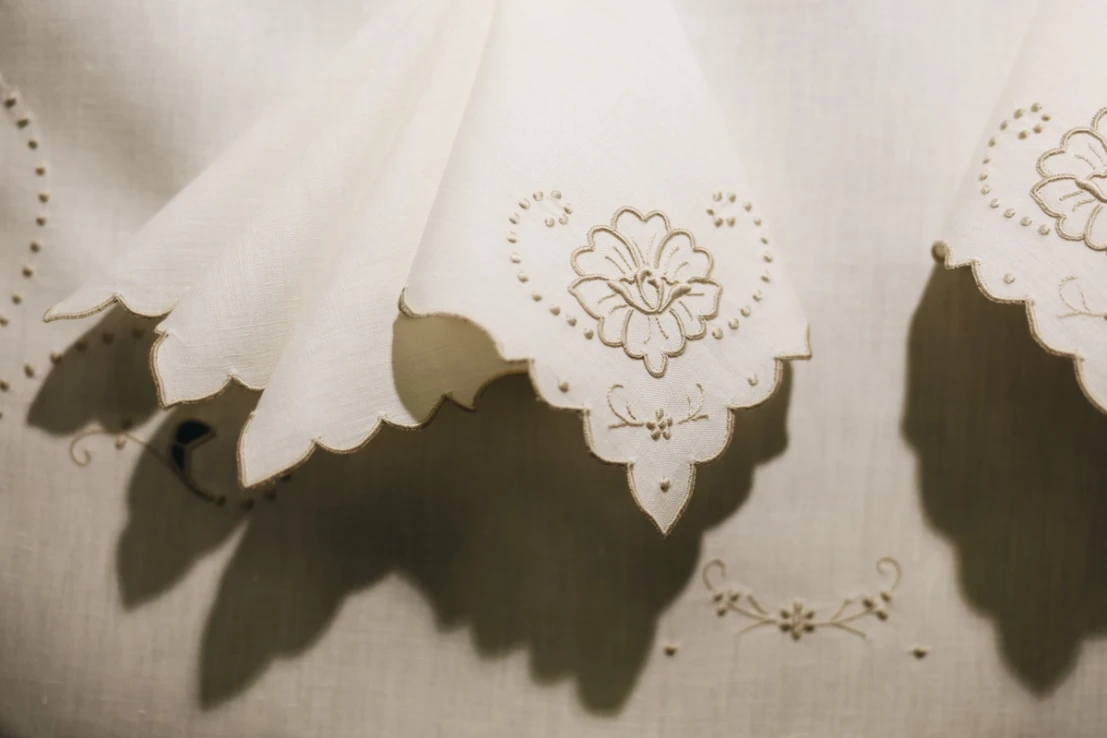
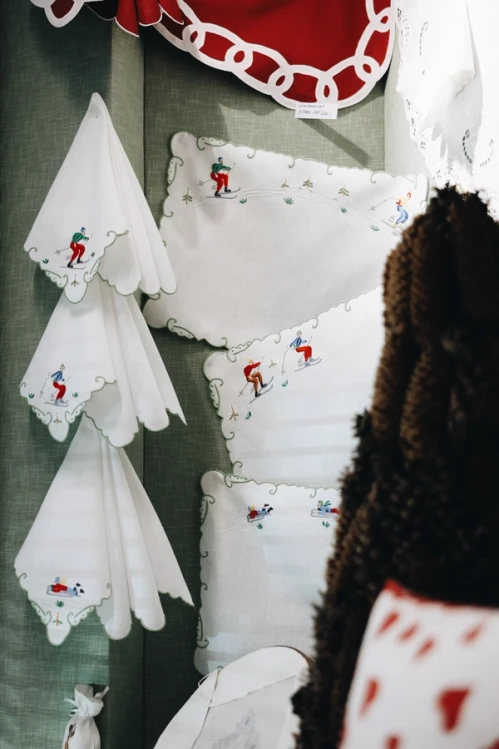
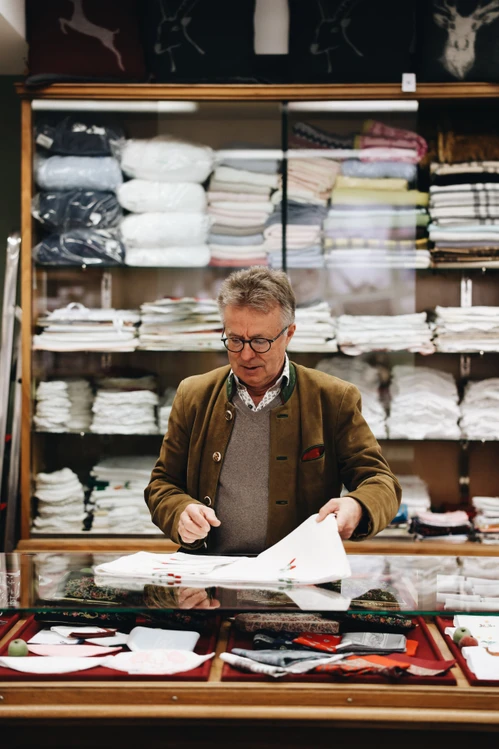
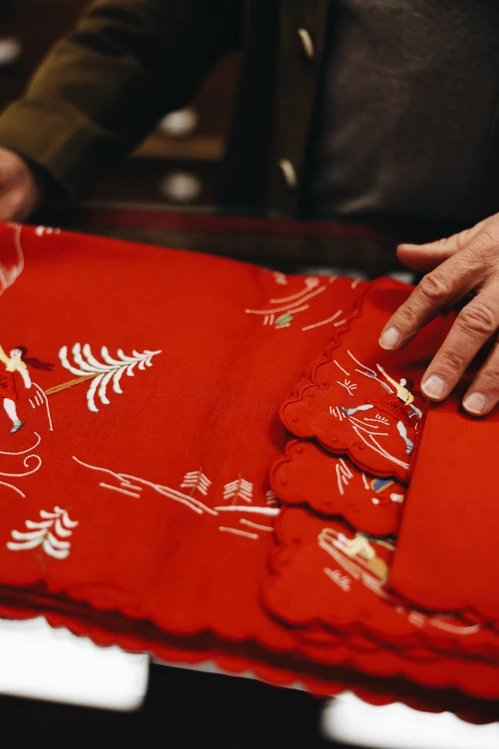
But such pieces require patience. Custom orders can take up to two years to complete. Hand embroidery moves at a rhythm defined by concentration and care, and the process carries an emotional dimension that cannot be rushed. Clients understand that what they are receiving is not simply a product, but the result of time, dedication, and human attention.
For us, hand embroidery transforms every single piece into a work of art. It’s a piece of art in use.
Historically, embroidery was far more than a decorative craft in Switzerland. In rural areas, particularly in farming communities, it once provided a crucial source of income during long winter months. Families relied on it as an additional livelihood, and Swiss embroidery was highly regarded beyond the country’s borders.
At Ebneter & Biel, that legacy still defines the way each object is made. From the moment a design is transferred onto fabric to the final washing of the finished textile, the entire process remains manual. Machines may assist in the early stages of design development today, but the embroidery itself is still done exactly as it has always been: by hand.
The company itself is also a story of generations. Christian and his sister grew up within the rhythms of the workshop, helping out as children wherever they could. At the time, the future of the business did not necessarily seem like their own.
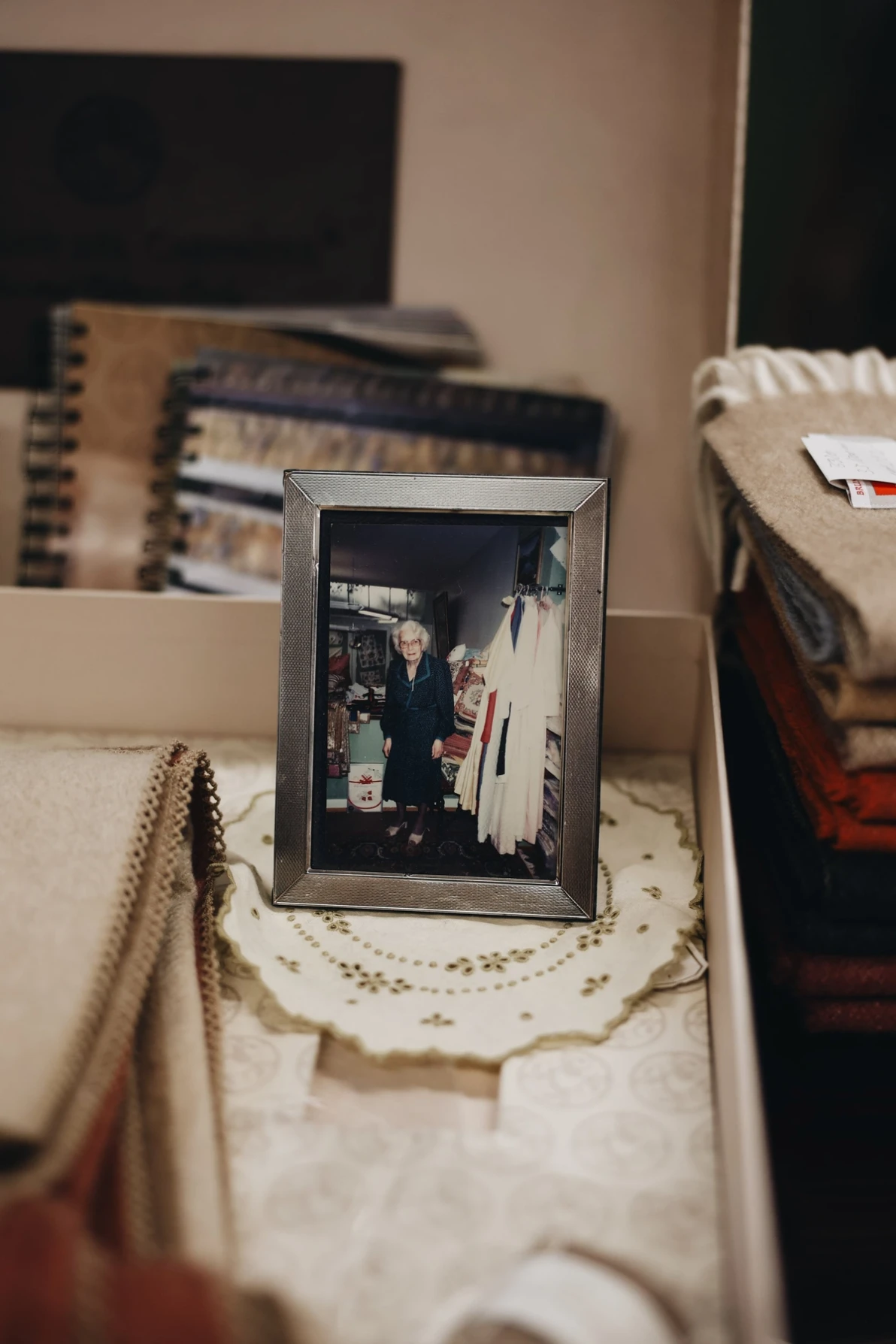
Both siblings eventually trained as banking specialists and spent nearly a decade working in the financial sector before returning to the family company when their father needed support. Their arrival introduced new structures to the administrative side of the business—modernizing systems while preserving the essence of production.
When my sister and I started working at Ebneter Biel, we were still children and helped out wherever needed.
The workshop environment reflects the slow, attentive nature of embroidery itself. Every stitch requires concentration, patience, and sensitivity to detail. For this reason, the team approaches the embroiderers not as workers on an assembly line, but as creative individuals whose state of mind directly influences the quality of their work.
We consider our embroiderers to be artists and they need a lot of time to make these creations.
Embroidery is not simply a technical act; it is also a personal one. When the embroiderers are fully immersed in their work, the result carries a vitality that cannot be replicated by machines. The slight variations in thread tension or rhythm give each textile a subtle individuality—proof of the human hand behind it.
St. Moritz, with its alpine setting and international visitors, offers an unusual backdrop for such a traditional craft. The Engadin valley attracts travelers from across the world—people who come in search of beauty, rarity, and authenticity. For many of them, discovering Ebneter & Biel becomes part of that experience.
The seasonal rhythm of the region also shapes how these textiles are used. Summer is when the pieces often come to life: tablecloths laid out during evening dinners, embroidered towels accompanying swims in alpine lakes, linens displayed during gatherings with friends and family. Winter, by contrast, is the time of creation. While snow falls outside and darkness settles early over the valley, embroiderers sit inside warm homes, working patiently with threads that form butterflies, flowers, and sea-inspired motifs.
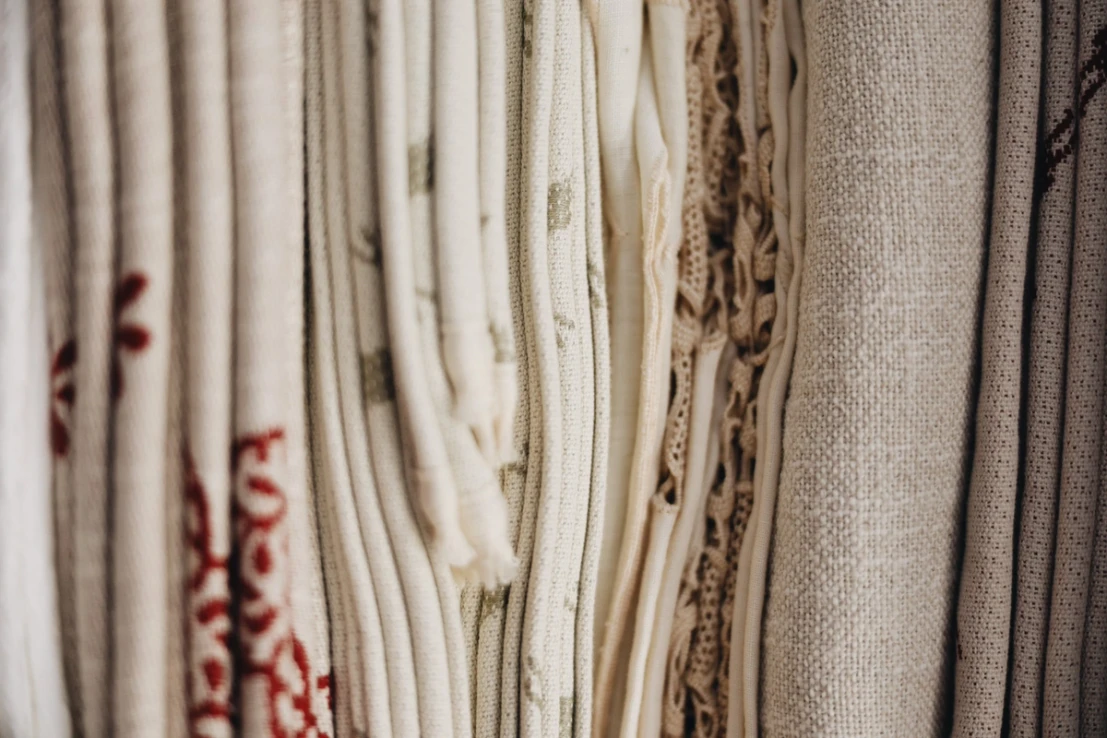
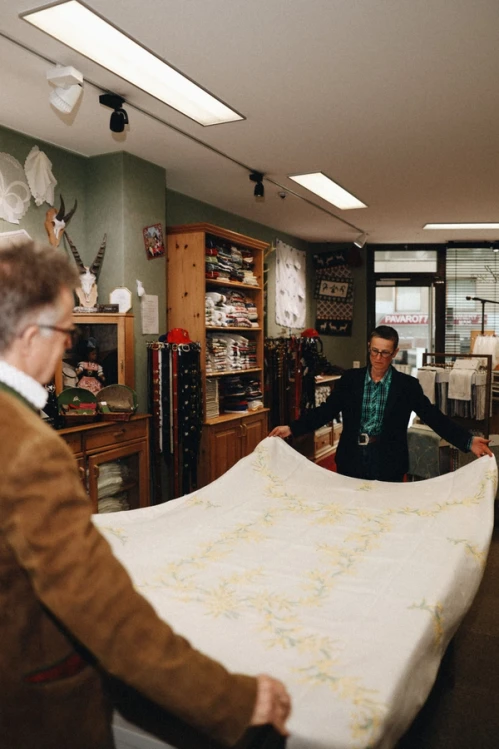
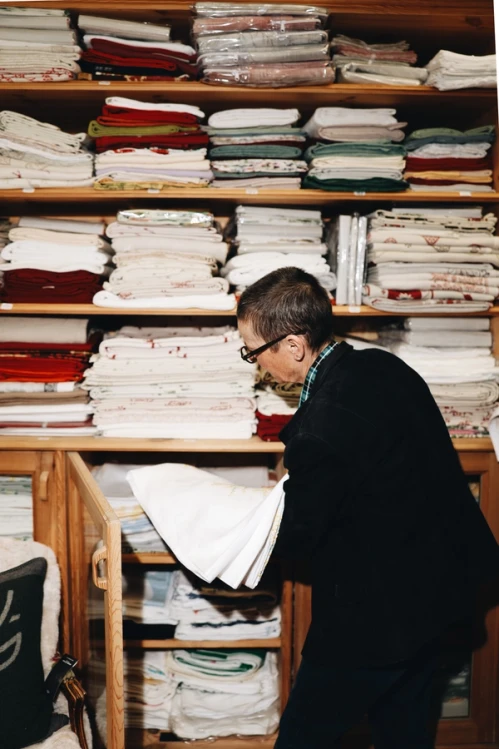
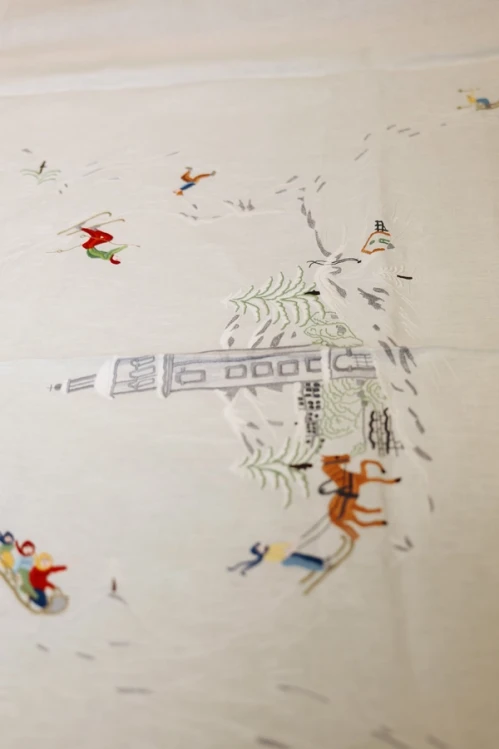
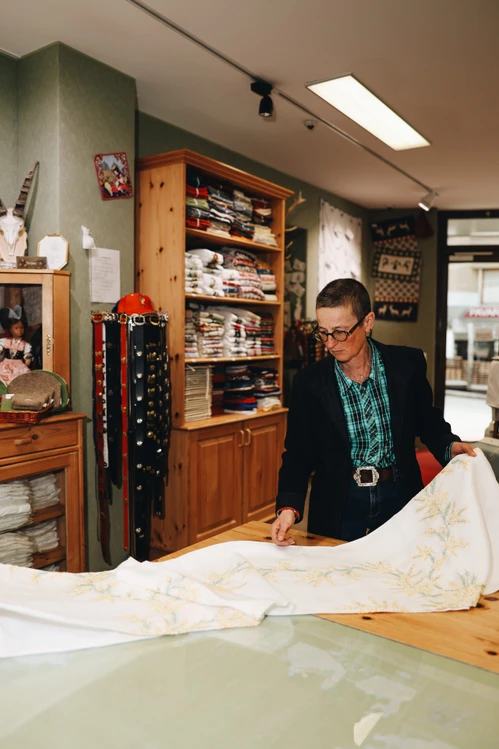
Looking ahead, the future of Ebneter & Biel is guided less by expansion than by preservation. Hand embroidery as they practice it has nearly disappeared in Europe, and their workshop remains the last of its kind in Switzerland. One idea for the coming years is the creation of a small museum within their shop—an intimate space where visitors could learn about the tradition and see examples of embroidery dating from the late nineteenth century to today.
Such an initiative would not only document the history of the craft but also acknowledge the people who have sustained it for generations.
For Christian Biel, the responsibility is clear: to continue supporting the embroiderers whose knowledge keeps the practice alive, while offering clients the highest possible quality and guidance. Even as lifestyles change and the culture of elaborate table linens evolves, Ebneter & Biel remain committed to what they do best.
More than flowers: “Plus quam flores” by Gian Giovanoli at the St. Moritz Design Gallery•A house of many lives: Villa Beaulieu, formerly home to Klinik Gut•“I Contain Multitudes”: Light art in public spaces by Marinella Senatore•Paris has a new fragrance. And St. Moritz takes centre stage: PARIS–ST. MORITZ by CHANEL.•