Dream Builders
Alistair MacQueen is a UK-based freelance writer for luxury publications and contributing editor at The Gentleman’s Journal. He has written on Engadin art for The Observer and on sgraffito for Monocle—and still craves pizzoccheri now and then.
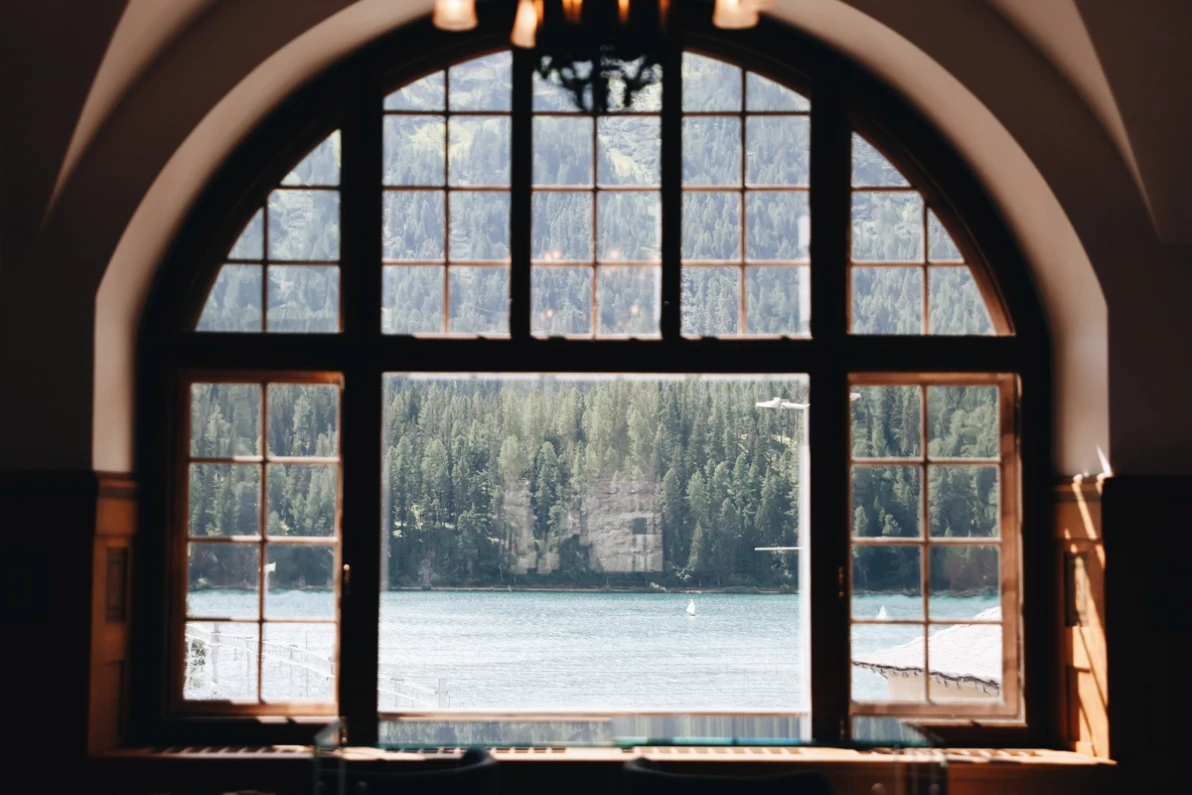
The motto for St. Moritz is said to be: “There is nothing that does not exist here”, but there could easily be another: “Think big”. From the village’s modern-day founding fathers, gallery owners, hotel managers, jewellery designers, artisan entrepreneurs, and music festival organisers, the ineffable and dynamic spirit of St. Moritz runs through them all.
This fervour to create something that is larger, grander or spiritually significant and soul-stirring is everywhere you look around here. Some might say it began in the mid-19th century, when Johannes Badrutt had the idea to create a world-class destination out of an agricultural valley.
Badrutt’s vision was no doubt amplified by the architect Nicolaus Hartmann Sr. Born in Chur in 1838, he studied at various drawing and trades schools, and had already overseen a selection of replanning and building projects for villages, spas, and villas around Switzerland by the time he arrived in St. Moritz in 1872.
Working free of any government direction or policy, Hartmann Sr undoubtably laid the foundations for a burgeoning tourist industry. He followed no formal design language as such, but his constructions braided together a raft of styles from neo-Gothic, neo-Renaissance, late classicism and the typical “chalet style” we come to recognise today.
Underscoring his belief that architecture should respect and elevate its surroundings, Hartmann Sr began working with the area’s classic wood stocks and local quarries to lend authenticity to his enduring designs. His projects were designed to entice and enchant any new arrivals – who ranged from members to the European nobility to ardent English winter sport fans, all attracted to the Kulm Hotel’s nascent tobogganing club. And when it comes to Hartmann Sr’s projects, there seems no better place to start…
Kulm Hotel – 1886
Johannes Badrutt had owned the Engadiner Kulm guesthouse since 1856. Twenty years later, he commissioned Hartmann Sr to design an extension to the hotel to accommodate an increasingly discerning clientele. With exacting brio, Hartmann designed the West Wing of the Kulm, setting the standard for Alpine buildings that were opulent yet harmonious within this mountain setting. The extension had to accommodate hydraulic lifts, warm-air heating, and the most up-to-date water closets for guests. The new West Wing’s mix of architectural elegance and natural beauty was the first step in establishing the town’s unique visual identity.


Grand Hotel Kronenhof Pontresina – 1870
The Kulm wasn’t the only building to receive attention from Hartmann Sr. In nearby Pontresina, the Grand Hotel Kronenhof also needed to live up to its name and its neighbours in St. Moritz. Hartmann was drafted in to design an extension for the building, which involved changing its orientation to create a central courtyard that exuded exclusivity, all designed in a neo-Baroque style. Hartmann’s design truly encapsulated the Belle Epoque feel of the building, and elevated the perception of Alpine architecture in yet another grand project.


The Old Schoolhouse – 1886 – Nicolaus Hartmann Sr and Jr
If there’s one building that represents the legacy of the Hartmann family over all others, it is perhaps the Old Schoolhouse in St. Moritz Dorf, which is now the site of the St. Moritz Documentation Library. Dr Leza Dosch, an art historian and authority on architecture in the Graubünden area, tells us about the building’s history:
“Built in 1886 by Nicolaus Hartmann Sr, the core building consisted of a cubic, palazzo-like main building and a striking tower with a protruding hood, which is typical of the historicist era and the neo-Renaissance style. In 1909, Nicolaus Hartmann Jr expanded it, adding the East Wing and a hipped roof to the building. He retained the historicism, while also giving it touches of the local style, too.”
Hartmann Jr may have extended the Schoolhouse, but it was still very much his father who laid the classic and enduring foundations for this grand construction. The Old Schoolhouse was renovated in 1956, and modified in 1987 and 1996/97, with the installation of a community library, which still retains the high vaulted ceiling. More original interiors can be seen in the staircase area, auditorium, and school room.


Nicolaus Hartmann Jr
1880 saw the birth of Nicolaus Hartmann Jr, and another chapter in the architecture of St. Moritz was about to begin.
After training at the Ecole d’Industrie in Lausanne and the Technical University of Stuttgart, Nicolaus Hartman Jr returned to St. Moritz when his father died in 1903, and took up his office. During this transitional period of the early 20th century, Hartmann Jr’s style was more reformist in execution, with flashes of neo-Renaissance and Swiss Rusticity hewn throughout his designs. It was this confluence of design languages that proved to be a melting pot for what would become known as the “Engadin Style”.
The aesthetic elements essential to this would be his use of arched and funnel windows, high roofs and a blending of sgraffito and intricate stonework. He would produce designs that were both local and grand, which would keep a low profile while also retaining the aesthetic innovation that gave St. Moritz its indefinable appeal.
Dr Dosch explores the design shift and change in periods between father and son. “While Hartmann Sr focused mainly on construction work in the Engadin, Hartmann Jr was perceived as a hotel architect and a local protector throughout Switzerland. Hartmann Sr was an architect of historicism and therefore less interested in his own formal language. Hartmann Jr, in contrast, sought to transcend this and embraced the latest trends in regionalist reform architecture of the early 20th century.
Typical for Hartmann Jr is that, although he was primarily a regionalist, he was also an occasional historian. The Engadiner Museum and the Hotel La Margna beautifully embody the native motif of the Engadin funnel windows. The Segantini Museum and Haus Hanselmann (remodelled in 1912/13), on the other hand, feature elements inspired by international models: the former, the ancient Pantheon in Rome; the latter, Renaissance palazzi in Florence.”
Hartmann Jr’s legacy is writ large throughout the area; here are just a few of his key works to look out for.
Hotel La Margna – 1906
Fresh from designing the expansion of Hotel Margna in Sils, Hartmann Jr took on the task of designing the Hotel la Margna. He used commanding granite stone sourced from local quarries, both inside and out, and furnished the hotel in elegant wood panelling that was complemented by distinctive columns adorned with detailed engravings. Symbols also featured throughout, with the apotropaic dragons referencing local customs and traditions, as well as the engraving of St. Moritz’s patron saint, St. Mauritius.
The hotel’s manager David Frei tells us what Hartmann Jr’s involvement brought to the hotel.
“When I became General Manager of Grace La Margna St Moritz, I had a deep appreciation for the legacy of Nicolaus Hartmann Jr. His approach to blending Art Nouveau elegance with a strong sense of place resonated with the enduring charm of the property. The most impressive feature of his design for me is in the lobby where the set of granite columns, sourced from Soglio, define the space’s character with their intricate detailing and distinctive colours. Beyond their decorative appeal, these columns also provide architectural drama, framing the space with balance and rhythm, making them central to the lobby’s grandeur and timeless charm. Those familiar with his broader work in the Engadin always appreciate how the hotel reflects the architectural character of the area, blending seamlessly with the landscape while standing out for its sophistication.”
A visit to the hotel today, with its well-preserved frontage and visual references to Hartmann Jr’s Art Nouveau style, serves as an impressive reminder of the village’s grand ambitions to establish itself as a standout hospitality destination, and Hartmann Jr’s input in fashioning this.


Engadiner Museum – 1906
In the same year, Hartmann Jr undertook the brief of constructing this museum, which was to be a place dedicated to showcasing the stories and rich traditions of the people in the Graubünden region and Engadin valley, as well to promote the Rhaetian and Ladin folk, crafts and cultures. The design for the museum is a living tradition in itself, and blends in seamlessly with the other properties on Via dal Bagn today. Hartmann designed the building in the style of a traditional Engadin house, not only paying homage to local architectural traditions but also reinforcing the building’s primary purpose.
The decorative sgraffito trompe l'oeil columns, symbols, and arches around the windows are exactly as they were designed in Hartmann’s day, but lovingly preserved for today’s visitors.
As such, this is still a remarkable building and museum, the design of which nods to the traditional farming properties in the area and the “Heimatstil” (homeland style) movement that was becoming popular in Europe in the earlier part of the 20th century.


Segantini Museum – 1908
Hartmann Jr, clearly on a roll with museums, was also chosen to design the Segantini Museum, which celebrated the work of the artist Giovanni Segantini. This Italian-born painter settled first in Savognin in Graubünden, and then in nearby Maloja. From there, he became synonymous with his plein air style (often hiking for hours to capture his Symbolist landscapes), which featured expansive and serene views of the lakes, mountains, and forests.
Hartmann Jr made his boldest design move yet in the design of this museum, using local rubble masonry in its construction. The museum sat high above the road, asserting both its dominance and importance to any visitors. The building’s grandeur and dominance were further accentuated by its impressive cupola roof. This monolithic dome structure had the effect of providing a capacious, vaulted feel, providing a perfect setting for viewing Segantini’s expansive landscapes in the round interior space. The museum’s visual devices mean that it serves a dual purpose, functioning as both a memorial and museum simultaneously – a fitting homage to the painter who captured the scenes and hearts of so many in the region.


St. Moritz Railway Station – 1927
Having already designed and built the famed Administrative Building for the Rhaetian Railway in Chur, as well as the Station building (and Mountain Inn) at Alp Grüm in Poschiavo, Hartmann Jr certainly had form in the domain of transport architecture. St. Moritz Railway Station, renowned for being the highest urban railway station in Switzerland, serves as a vital entry point for countless tourists and visitors. For this building, Hartmann blended functionality and form. Built from the same polished rubble of local stones that typified his work for the Segantini Museum, the station itself is surprisingly squat, embodying Hartmann Jr’s style of building with a sense of modesty that harmonises with its natural settings.
With its traditional casement windows and sloping roof cosseting a small clock tower, Hartmann’s impressive stone columns on the platforms support low roofs that have the practical use of protecting those boarding or disembarking from trains. The whole construction creates a welcoming atmosphere for discerning international travellers, with its blend of Swiss tradition in a Patrician style and modern efficiency – another prime example of Hartmann showcasing Engadin aesthetics in harmony with contemporary functionality.
*Many thanks to Dr Leza Dosch for his help and support with this article. The art historian in Chur is the author of numerous works, studies and publications: “Design in Competition” and “Architectural history of Graubünden 1850–1930” (Scheidegger & Spiess). *


Next Up
Next Up
Hotel Grace La Margna
Next Up
Kulm Hotel
Next Up