Drawing Her Way Back: How Penelope Misa Uses Art to Find Her Voice
How did you get into illustration, especially winter sports illustration?
I was always into skiing. Growing up in Park City, Utah, I loved sports, being outside and staying active.
I went to art school and had a formal education there, but I struggled a bit with the direction we were being pushed in. The focus was very much on becoming gallery artists, and that was really the only format presented to us. It just didn’t feel like me. I would visit galleries and think: this isn’t where I see myself.
So I started to wonder whether, if I simply kept following my own passions – hiking, skiing, being outside – I might be able to build a life around the things that genuinely inspired me.
I later apprenticed under a master jeweller and worked in that field for seven years. It was nice because I had a creative job, but I could still keep my personal creative practice separate from my work. I was in my early twenties and still trying to find my voice. I came from a fortunate, middle-class family and, at the time, I honestly felt like I didn’t have anything to say.
How did you find your voice?
I was caught in an avalanche and almost died, which was every bit as traumatic as it sounds. I was with my boyfriend at the time – my first love – and going through such an experience together was simply too much. There was a lot of sadness and a lot to process.
Afterwards, I stopped skiing for a couple of years. I just couldn’t get back out there. I became very depressed, and skiing had always been my form of expression. So I started meditating and painting instead. I asked myself: how do I want to feel about skiing again?
I had grown up surrounded by Olympians and people at the very top of their game. But at some point, I realised I was skiing and mountain biking almost exclusively with men, and the energy became too much for me. It was all intensity and performance. I was skiing well, but I wasn’t having fun anymore.
That’s when I started painting these little naked skiers on everything – covering canvases, mugs, shirts, anything I could get my hands on.
What do these naked women signify?
It was a way of shedding heavy emotions and lingering trauma. It just flowed out of me. I had no expectations of marketing or selling the work. I simply wanted to feel free and to shed all those layers of expectation.
I grew up in a very strict household, where the attitude was: if you do sport or academics, you have to be number one. That gave me drive, and I do love having goals and targets. But it also stripped some of the joy away. There was very little room for play and exploration. So this series of naked women skiing helped bring me back to skiing … just for me. Just for fun. Eventually, as I started sharing more of my illustrations and story, a supportive community began to build around my art, which inspired me to start selling my work.
I also love the female figure, and for me it became a celebration – a tribute to the women in my life. Dear friends who have elevated themselves in their professions, who have done incredible things. It’s fun, but it’s also a homage to all the women who have shaped me.
We commissioned you for a summer and autumn project. What do those seasons mean to you?
For me, it’s all about freedom: the freedom I feel while painting and the freedom I hope someone feels when looking at my art. And honestly, there’s nothing better than taking your top off after a long hike, lying in the grass and sunbathing. I love winter scenery, of course, but I love the other seasons just as much.
What is your process like when you are here on the ground?
I love plein-air sketching. Being an outsider makes me a little nervous, but for this campaign, I actually think that is a good thing. I get to see everything with fresh eyes.
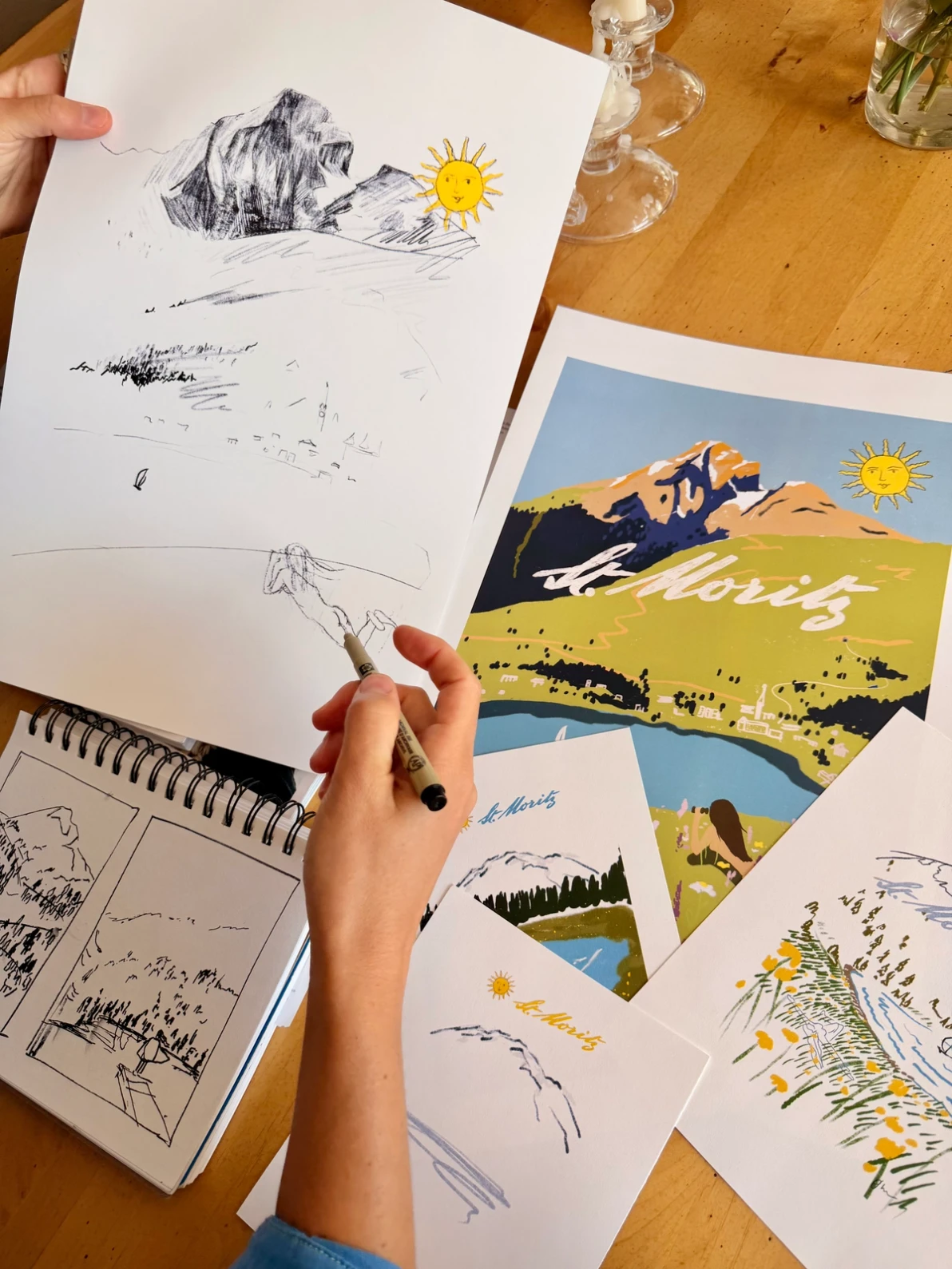
I am like a guest discovering the place for the first time. I run around taking photos, working quickly, putting down gestural sketches and trying to capture the character of what I see.
Talk us through the three illustrations – what inspired you to choose these three scenes?
I was so drawn by the sheer beauty of the Engadin Valley and all it has to offer. It’s an outdoor enthusiast’s and nature admirer’s ultimate playground, and it became so important to me to find a way to express the luxurious, peaceful yet powerful energy of St. Moritz. It’s a vortex of energy.
I love all the vistas overlooking the beautiful town and knew I wanted to draw an illustration of a woman lying among the alpine flowers, soaking in the views.
Next came the inviting turquoise-blue waters of Lake St. Moritz. I envisioned a lone figure enjoying a solo sail, with the wind blowing through her hair and the canvas sighing against the sky.
Finally, the autumn piece was inspired by the undeniably unique golden larches that transform the landscape with their copper and fiery glow. It may be one of my personal favourite times of year to trail run, and I wanted to capture the feeling of running free with golden leaves falling from the canopy.
I had such an inspiring visit, meeting locals and experiencing the nature that makes this pocket of the world so special. The magic never really leaves you, and it’s why I can’t wait to return to St. Moritz.
At the end of the day, when someone looks at your illustrations, what do you want them to see and feel?
I want someone to look at the art and think: I want to go there. I want to pass on the feeling I had in that place. And if I can do that through my lines and through my vision, then I’ve done what I came to do.
Get your posters below:
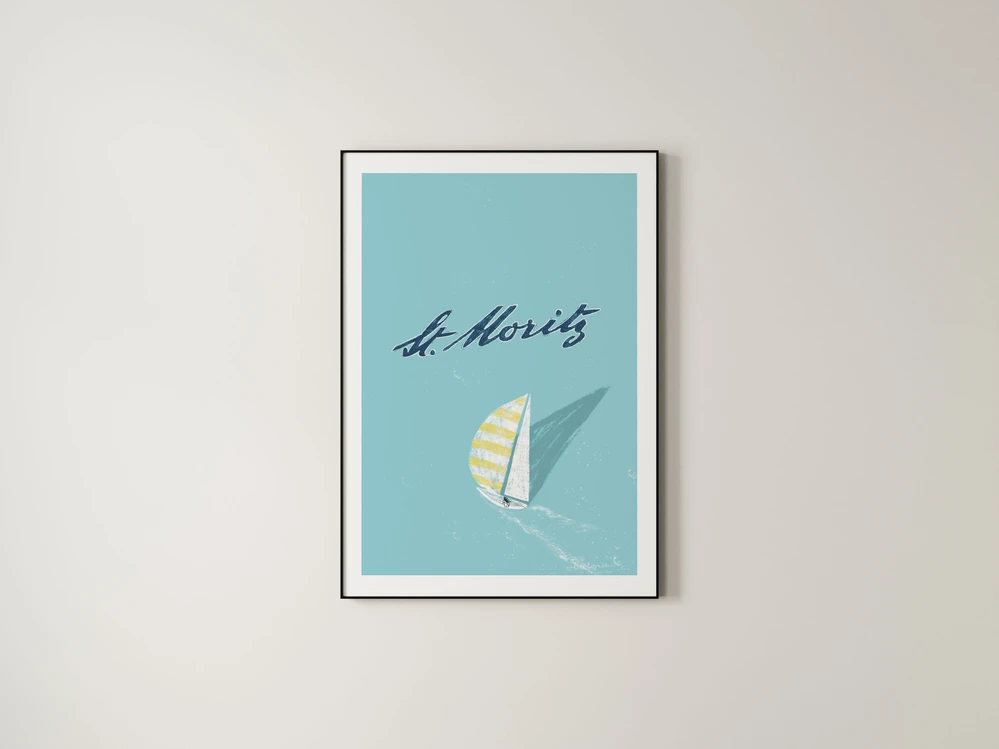
Quiet Waters by Penelope Misa x St. Moritz
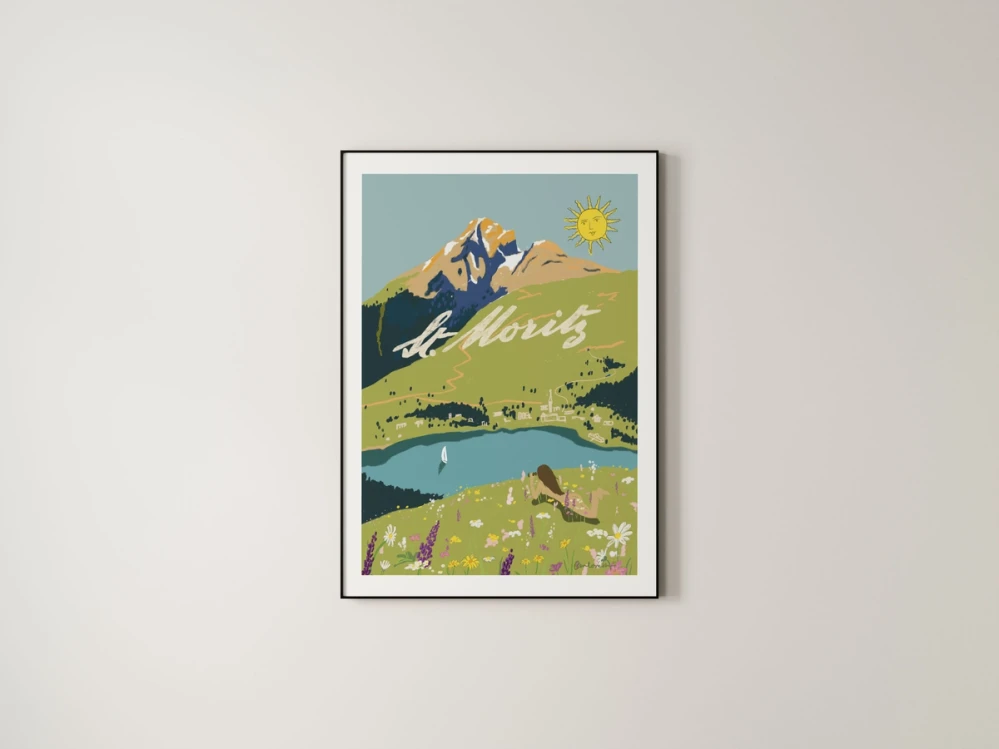
St. Moritz Reverie by Penelope Misa x St. Moritz
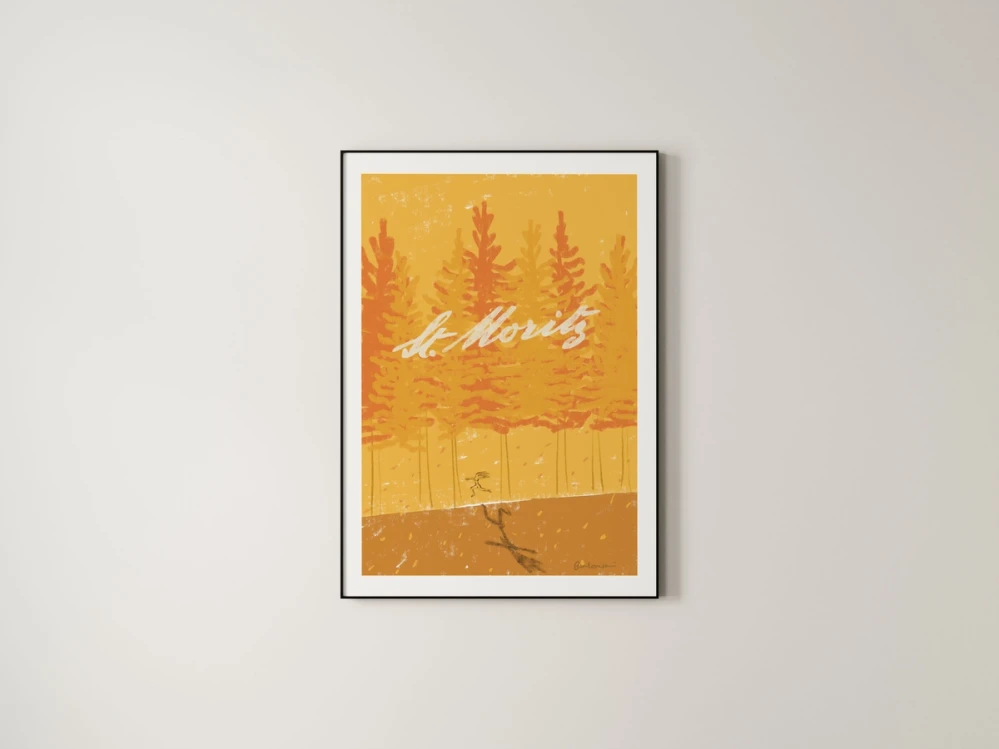
Golden Hour by Penelope Misa x St. Moritz
Quiet Waters by Penelope Misa x St. Moritz
St. Moritz Reverie by Penelope Misa x St. Moritz
Golden Hour by Penelope Misa x St. Moritz
Quiet Waters by Penelope Misa x St. Moritz
St. Moritz Reverie by Penelope Misa x St. Moritz
Golden Hour by Penelope Misa x St. Moritz
More than flowers: “Plus quam flores” by Gian Giovanoli at the St. Moritz Design Gallery•A house of many lives: Villa Beaulieu, formerly home to Klinik Gut•“I Contain Multitudes”: Light art in public spaces by Marinella Senatore•Paris has a new fragrance. And St. Moritz takes centre stage: PARIS–ST. MORITZ by CHANEL.•