Breaking Barriers
Impossible is just an opinion' is a quote from your website. What does it mean to you?
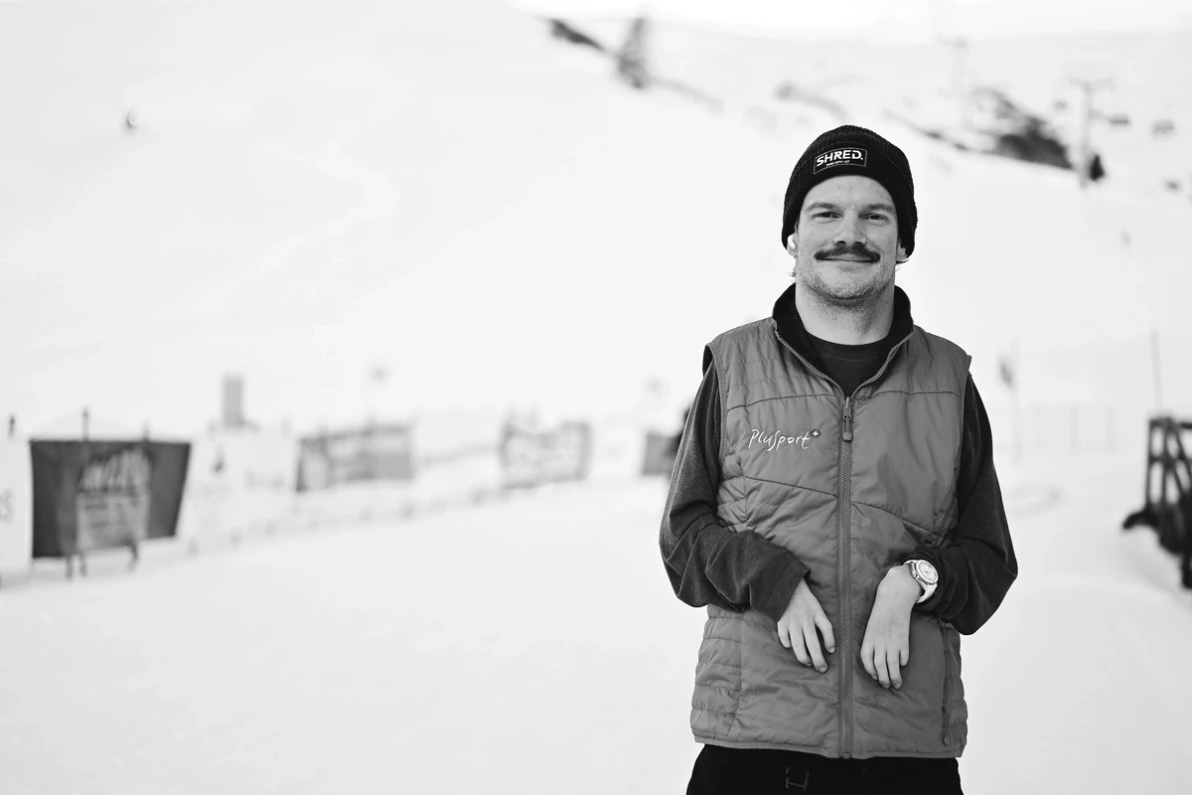
This applies to many areas of my life. Living with a disability requires a great deal of creativity. You encounter prejudices; for example, people assume that I can’t do something, when in fact it’s part of my everyday life. The reverse also happens: there are things I initially think I can’t do, but then I find a way to make them work anyway.
For example, I can’t straighten my arms, but I can put on a jumper with the help of a door handle. Small, everyday tasks like that represent major achievements for me. At the same time, I enjoy taking on big challenges, such as going on a ski tour without poles. Even my racing career is far from guaranteed: if I fall, I can’t use my arms to catch myself, and I can’t push the gates away in slalom.
Did you already have this creativity and motivation to overcome hurdles as a child?
Yes, absolutely. That’s how I was raised. My parents supported everything that brought me joy, without pushing me, but also without holding me back. I grew up in an environment where most people didn’t have disabilities. In gym class, I simply participated fully – for example, in floorball, I would tuck the stick under my arm. I was able to grow up in a very inclusive way and integrate well.
So how did you end up in competitive ski racing?
Throughout my life, I have often met the right people at the right time. One of those people was my childhood physiotherapist, who remains a close friend to this day. He was also a disabled sports coach and encouraged me to try ski racing. Because the disabled sports community isn’t that big, you quickly come into contact with professional athletes. That’s how I eventually joined the ski team and embarked on a career in high-performance sport.
What are the differences between alpine skiing and para-alpine skiing?
The basic requirements remain the same: you need snow and skis. However, disabled sports are designed to ensure equal opportunities, so they use a classification system. Depending on their impairment, athletes compete in one of three categories: standing, sitting or visually impaired. In addition, a calculated time factor is applied to compensate for differences in functionality.
The equipment also differs: sitting athletes use sit-skis, visually impaired athletes ski guided via radio communication by someone skiing ahead, and standing athletes may use prostheses, for example. I had special protectors that shielded my arms, and today I ski with adapted poles.
As an athlete, you’ve also split a helmet or two…
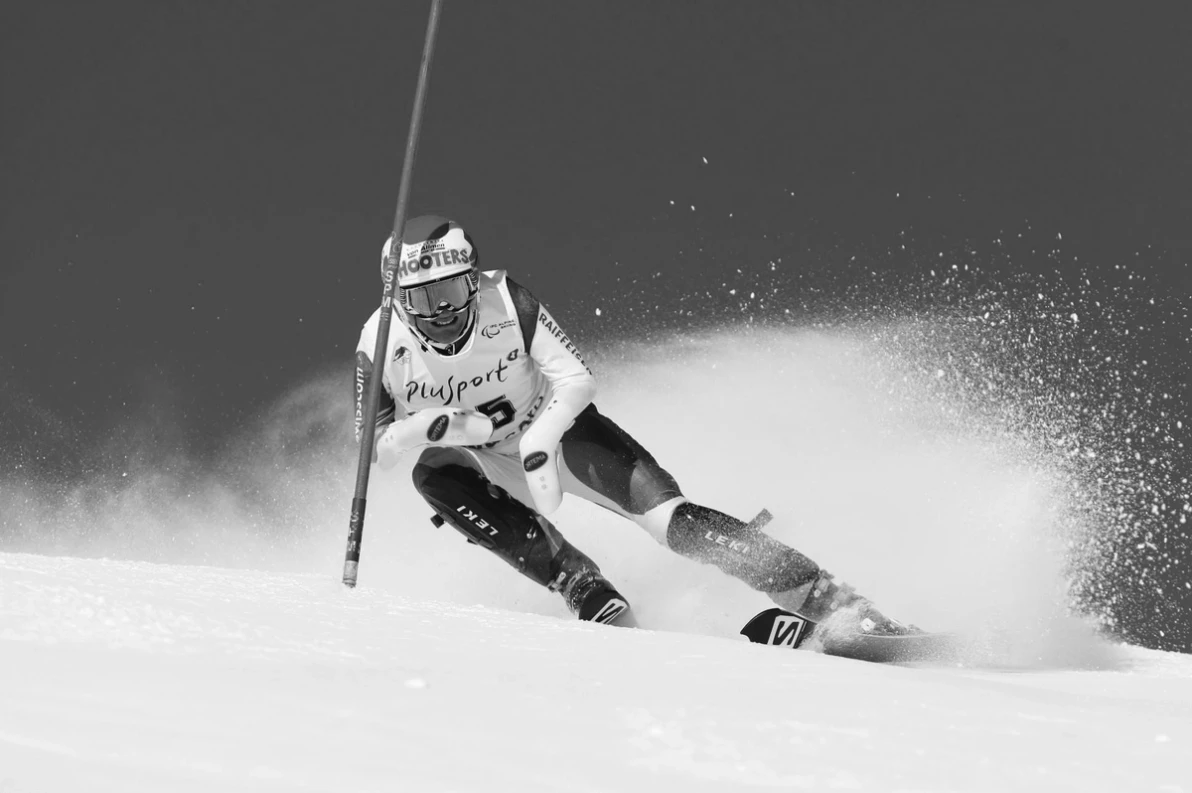
Yes, that's right. In ski racing, you hit the gates. While others can push the poles away with their arms, they bounce off my helmet. I’ve broken helmets before and suffered concussions as well. Luckily, this coincided with major improvements in equipment, and helmets became better padded.
Let’s talk about the Paralympics in Sochi 2014.
That was definitely the highlight of my career, even though I had to fight for my qualification until the very last race. And that race took place in St. Moritz! That's why St. Moritz holds a special place in my heart. That's where I achieved my best World Cup result.
How does it feel to start a race knowing that it's your last chance?
The day before, I didn’t finish the race and was at my limit emotionally. For the final race, it was clear that it was all or nothing. I had to succeed – otherwise my dream would be over. It worked. The worst part was waiting at the finish line until everyone else had finished and my top-10 result had been confirmed. This secured my place at the Paralympics.
And then Sochi – the highlight and the end of your career?
This was definitely the highlight of my sporting career. I didn't win any medals, but I made countless lasting memories. It was also the perfect time for me to retire. I had invested a lot in the sport, aiming to reach the Paralympics. I knew that I had achieved that goal and that it was time for new challenges. The important thing was that I was able to choose to stop, rather than being forced to.
What is it like to find your way in a new everyday life?
It's not easy. You have to leave behind a family and a team that you spent a lot of time travelling with. You also have to rebuild a structure that was previously dictated by sport, without the support of training plans and race calendars. It took me a few years to fully transition out of that. However, sport has remained an especially important part of my life to this day.
A year later you started working at PluSport. How did your experience as an athlete help you?
I was able to bring a lot of my experience into the organisation, including knowledge of locations, travel and procedures, as well as ideas for improvement. I have a direct connection with the people. This allows me to stay close to racing, even though I’m no longer on the tour myself. This has given me a new perspective on the sport.
The Para Alpine Ski World Cup takes place in St. Moritz from 19–21 December. What is the significance of these races?
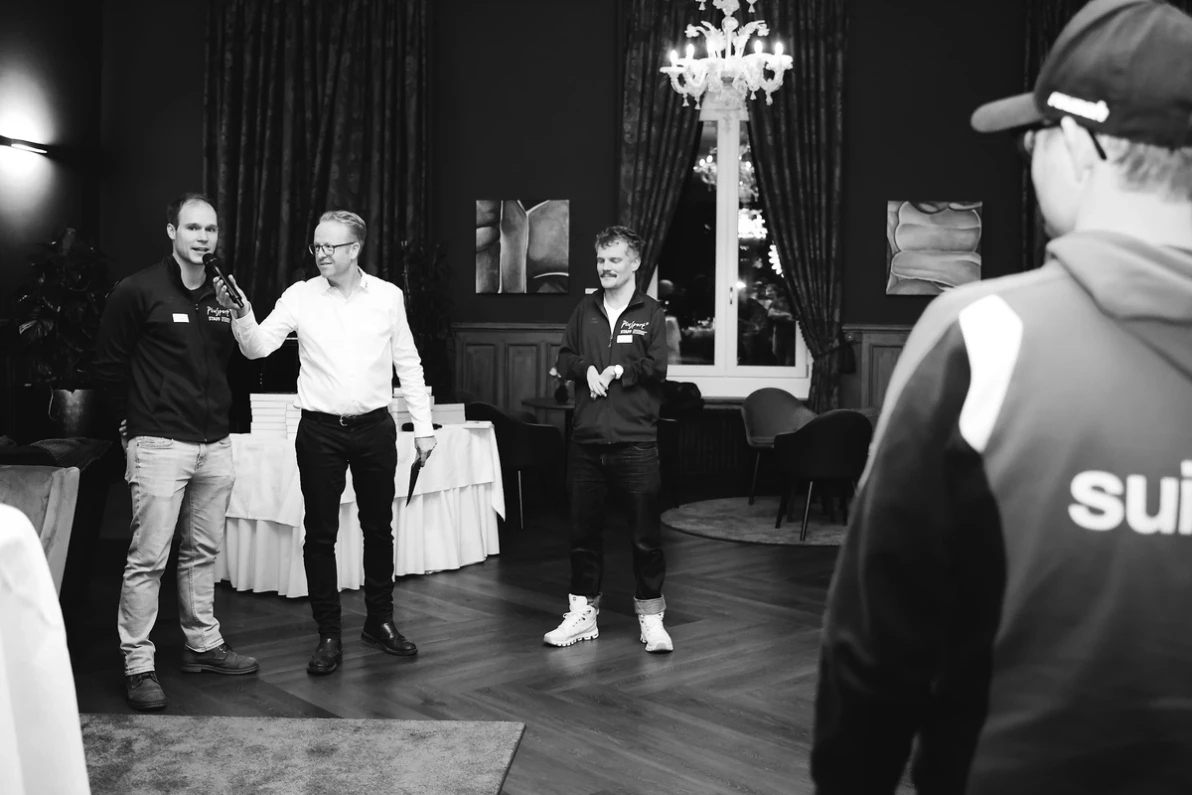
The Para World Cup in St. Moritz is one of the highlights of the entire World Cup circuit. A dreamlike racecourse, embedded in the beautiful Engadine mountains. The local race organisation around Robin Miozzari and Sandro Künzler has been ensuring perfect races for paralympic athletes for many years. Then there are the many incredibly dedicated volunteers from Voluntari Engiadina and Microsoft. Teams from all over the world love coming here, and the Swiss athletes are immensely proud of their home race. As a federation, we are also grateful for the wonderful and inclusive cooperation with St. Moritz Tourism, the municipality, and all local partners.
What does St. Moritz mean to you when you're not on the slopes?
Just one month after retiring, I went ski touring at the Julier Pass. From there, I could look down onto the racecourse. Standing there, it felt like I had come full circle – one of the most special moments for me here. I’ve also recently visited the region with my little family in a camper van.
What would you tell people who watch the races from the chairlift?
Come and join us! It's worth experiencing it live, both along the course and in the finish area. In our village, you can find out about disability sports, try an exciting awareness course and get up close to the athletes and their sports. There will be plenty of action: it’s an important Paralympic qualifying race, and there have never been so many athletes competing.
And people should be aware that ski racing is already very demanding. So, what does it mean to race blind, sitting down or on one leg? That's taking it to the next level!
Earlier, you mentioned that creativity and motivation play a significant role in your life. What advice would you give to people who feel unable to express their creativity or freedom?
Try it! If it doesn't work the first time, just ask for help. People with disabilities learn from an early age to accept support. That opens doors. A good example for me is wake surfing. I only managed it because we worked together as a team, turning the impossible into something possible.
*Joachim Röthlisberger grew up in the Bernese Oberland. A former Paralympic athlete, he has been a member of the organising committee for the FIS Para Alpine Ski World Cup St. Moritz for over 10 years. He works in marketing and communications at PluSport Disabled Sports Switzerland.
FIS Para Alpine Ski World Cup St. Moritz:
From 19–21 December, over 120 athletes from 25 nations will compete on the Corviglia course. For the Swiss team, including Robin Cuche and Théo Gmür, this home race is an important step towards the 2026 Paralympics in Milan and Cortina.
Start times: 1st run: 10:00; 2nd run: 13:00. Admission is free. *
Photos: Marcus Hartmann & Marco Mantovani
More than flowers: “Plus quam flores” by Gian Giovanoli at the St. Moritz Design Gallery•A house of many lives: Villa Beaulieu, formerly home to Klinik Gut•“I Contain Multitudes”: Light art in public spaces by Marinella Senatore•Paris has a new fragrance. And St. Moritz takes centre stage: PARIS–ST. MORITZ by CHANEL.•