The Science of Getting Better
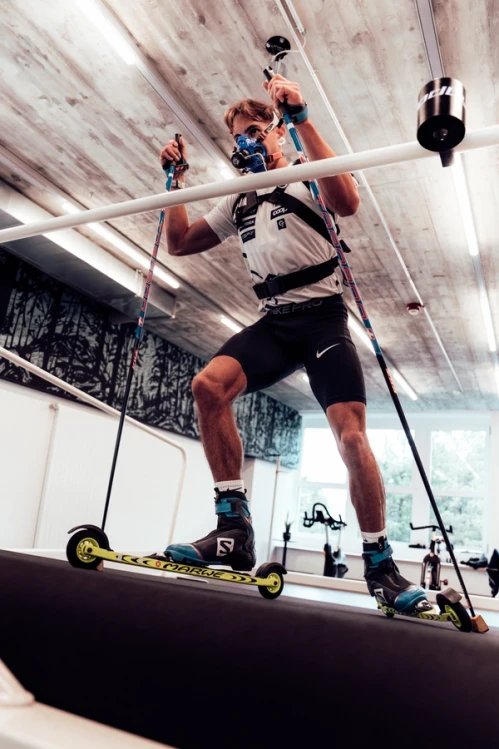
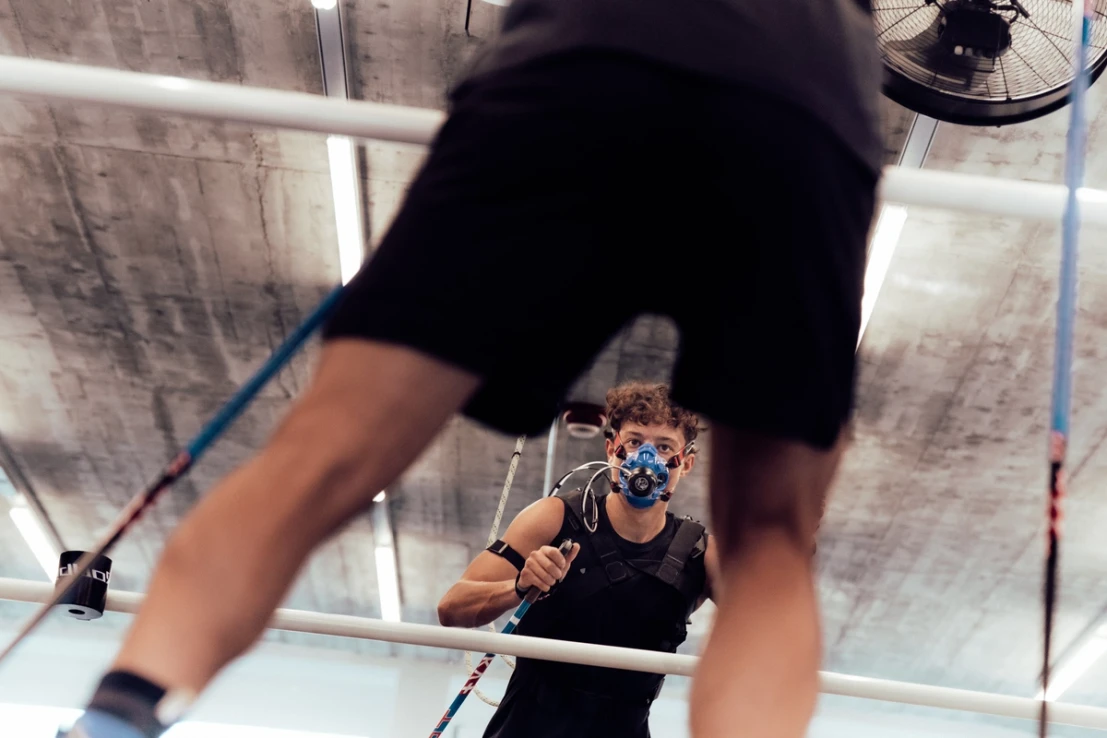
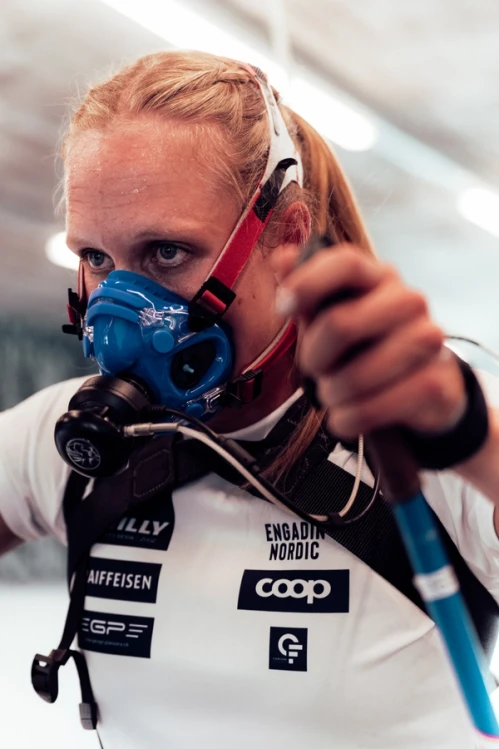
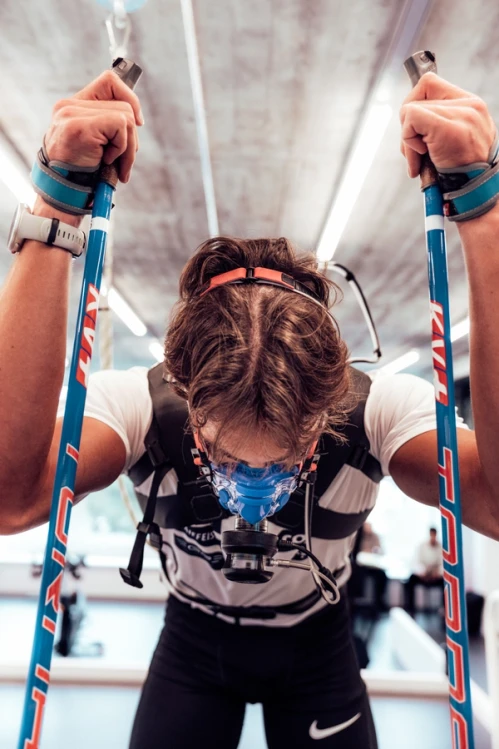
On an October morning at Klinik Gut in St. Moritz, preparations are underway for another day of performance testing. Over three days, around 20 young cross-country skiers and biathletes from Engadin Nordic will push themselves to their limits on a treadmill, wearing roller skis and breathing masks. The results will help shape their training, and indicate current fitness levels ahead of the coming winter. It all looks rather scientific – and perhaps a little intimidating. But what can the rest of us learn from it?
Matteo, let's start with a simple question. Why would someone want to take a performance test?
Because it tells us how your body responds to physical effort. Everyone is different, and the idea is to understand your individual limits and use that information to train more effectively. And it's not just for elite athletes. Anyone who trains regularly and wants to improve can benefit.
What exactly do you measure?
Among other measurements, we evaluate your lactate thresholds, heart rate and your VO2max – essentially a measure of how much oxygen your body can use during intense exercise. Together, these values help us establish your individual training zones and to have a full overview of your cardiopulmonary fitness level, in other words, how your heart, lungs, blood vessels and muscles work together during physical activity.
But doesn't my sports watch already tell me how hard I'm training?
It gives you numbers and approximations, but the important thing is knowing what those numbers mean for your body. A performance test helps us establish the right training intensities for you personally. You can then use that information in combination with your watch.
So if I came in as an average recreational runner, would I take the same test as a professional athlete?
The principle is the same, but we adapt the test. We work with Swiss Olympic protocols, although I adjust them to the individual. If someone isn't a fast runner, I'll start slower and increase the intensity in smaller steps. Instead of three or four stages, they might complete eight. That gives us more data and a more accurate picture. We used to rely more on fixed lactate thresholds of two and four millimoles. Today, the approach is much more individual.
You're currently testing young cross-country skiers from Engadin Nordic. What happens before they even step onto the treadmill?
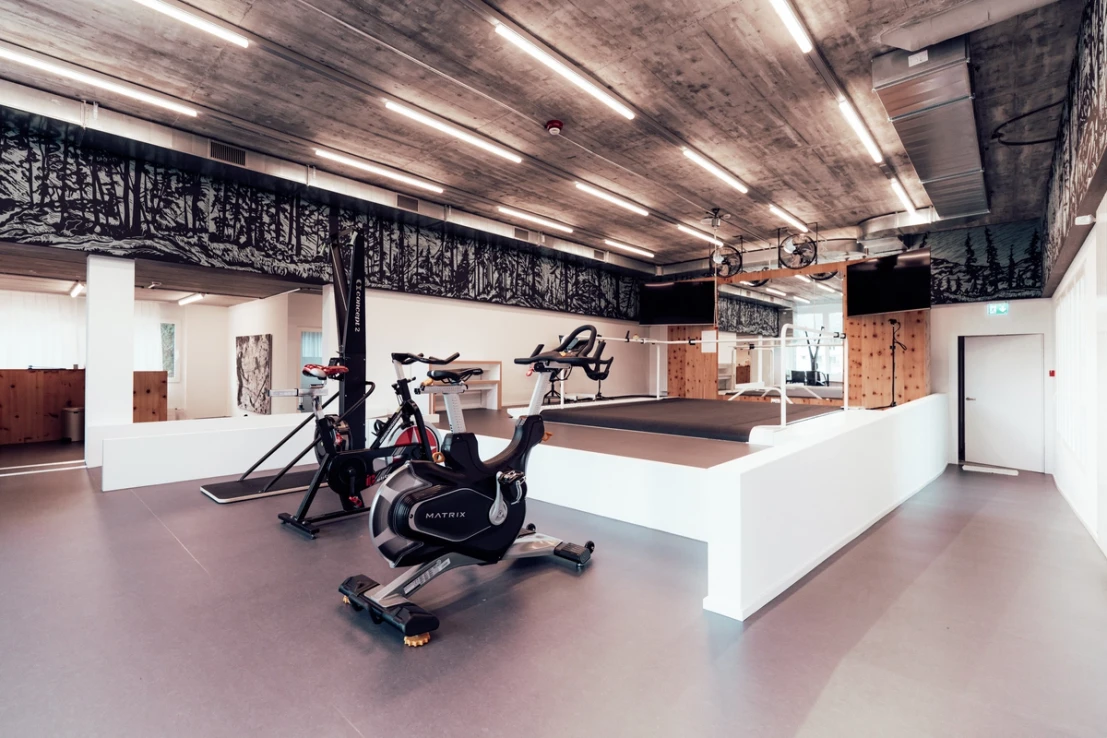
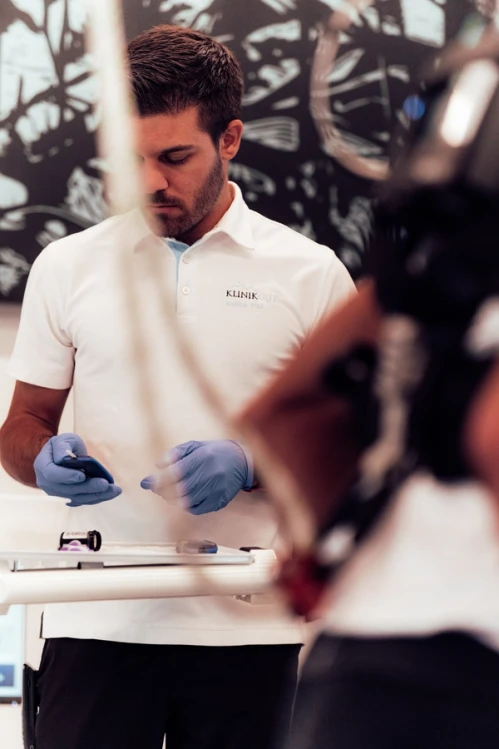
Quite a lot. I arrive early because the VO2max equipment needs about 90 minutes to warm up. During that time, I prepare everything and go through the day's schedule with the coach. The athletes begin with a blood sample at the lab, followed by about ten minutes on a stationary bike and five minutes on a ski ergometer to warm up. We also ask them about their recent training, nutrition, health and motivation.
Why does it matter what someone had for breakfast?
Because it can influence the results. If an athlete hasn't eaten enough carbohydrates, for example, their lactate values may be lower than expected. If something looks unusual during the test, those preliminary questions can often help explain it.
And then the real work begins?
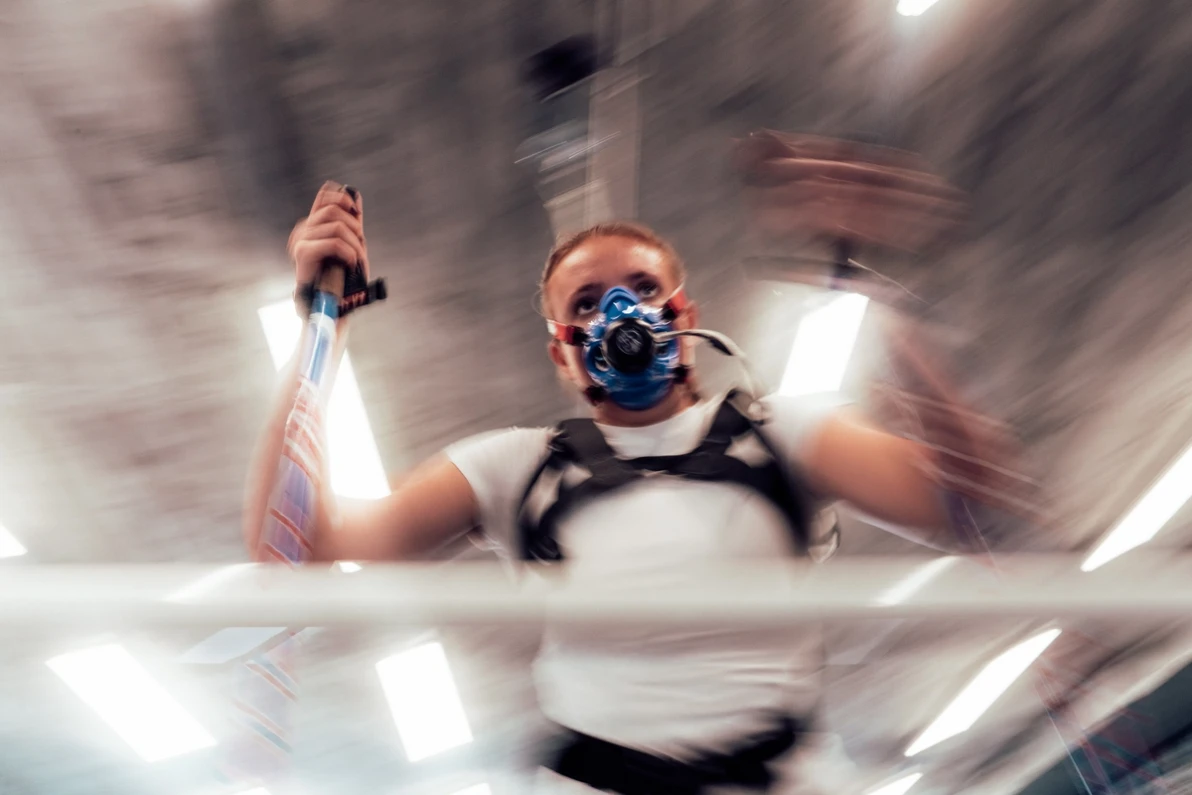
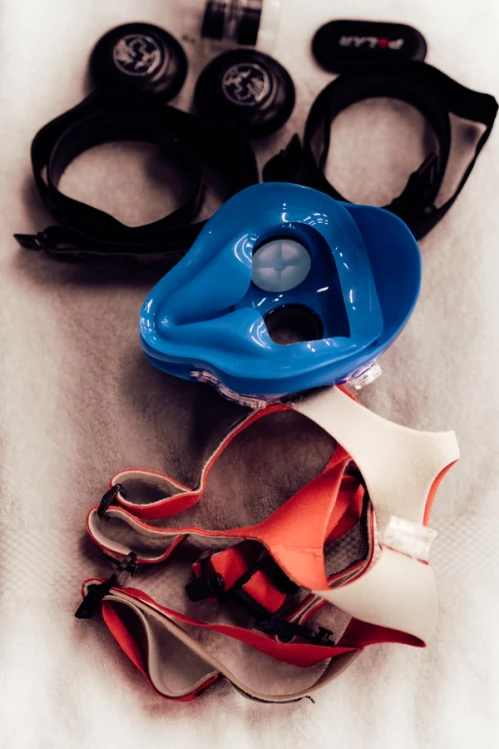
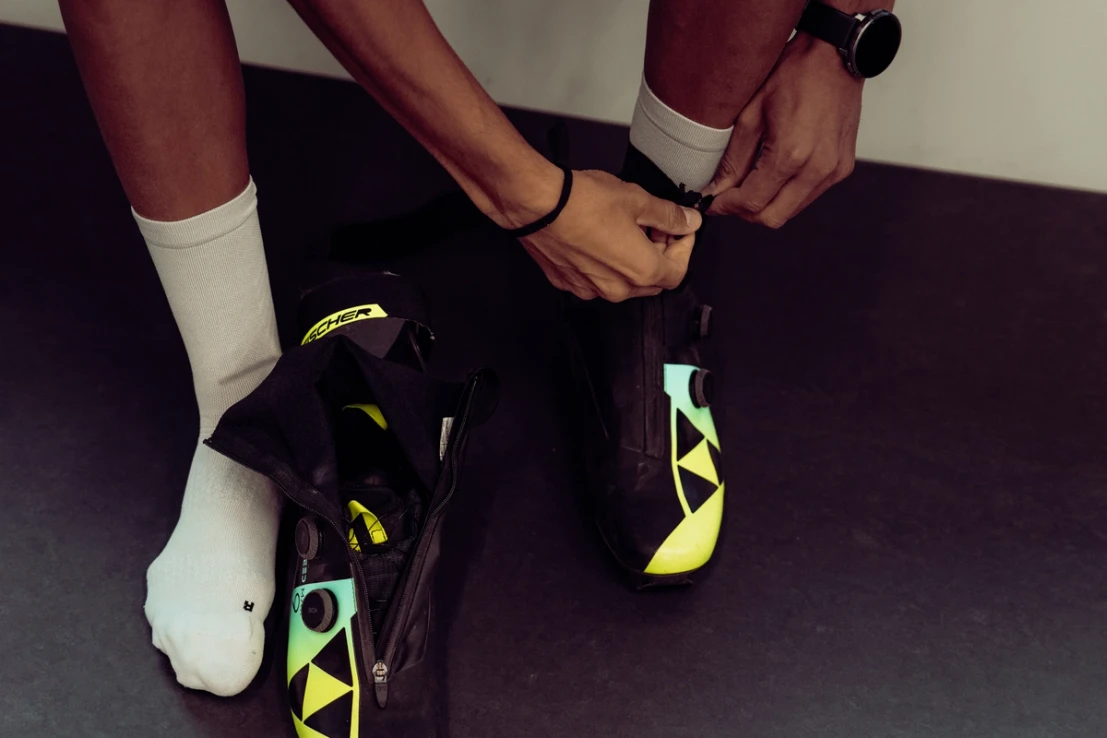
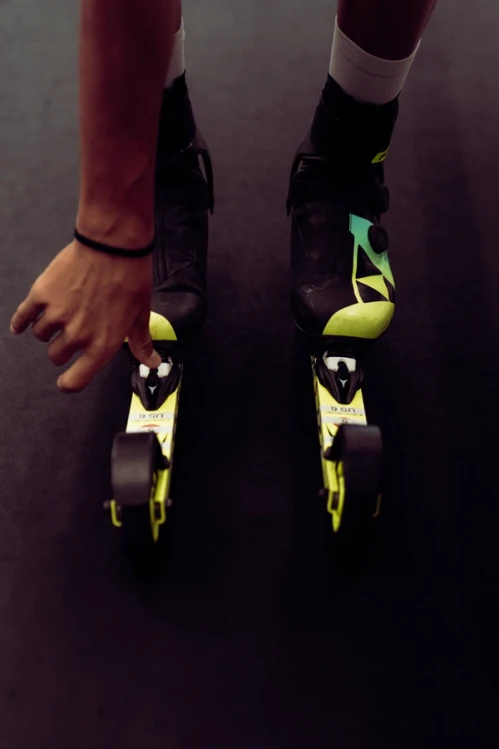
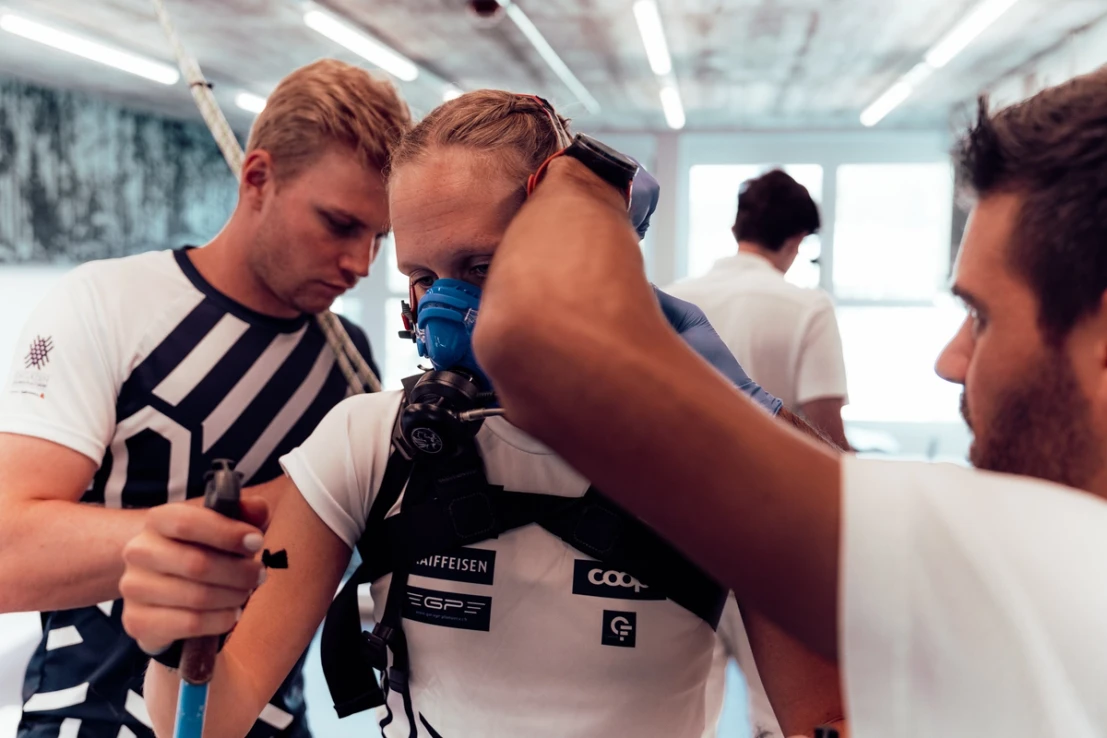
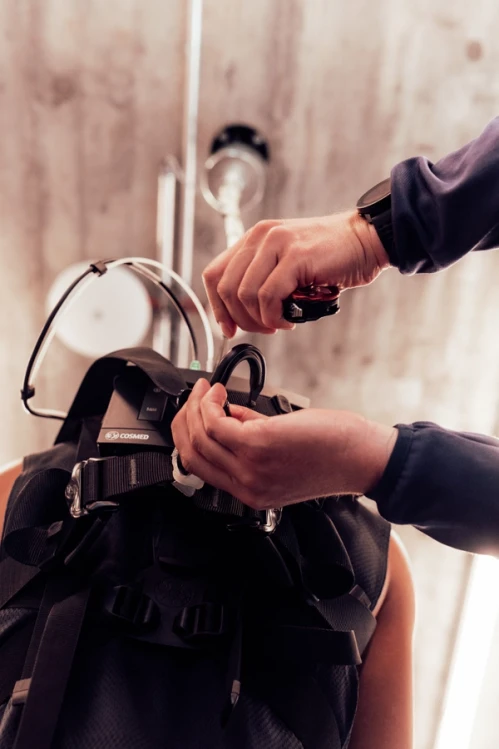
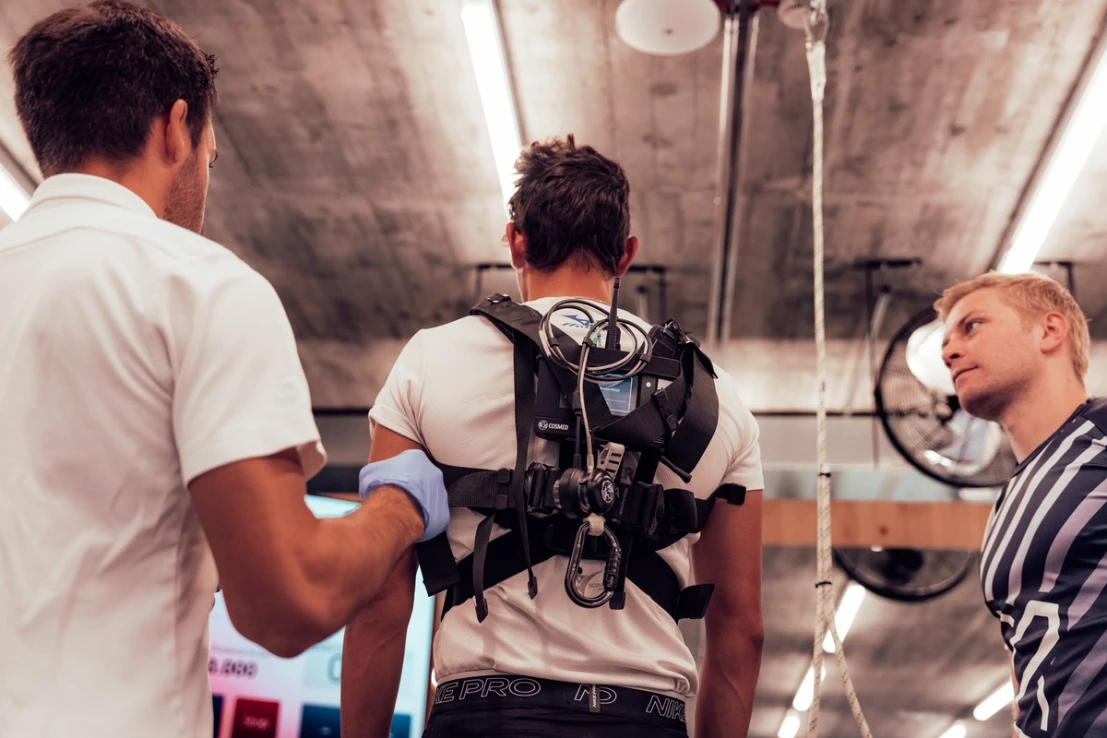
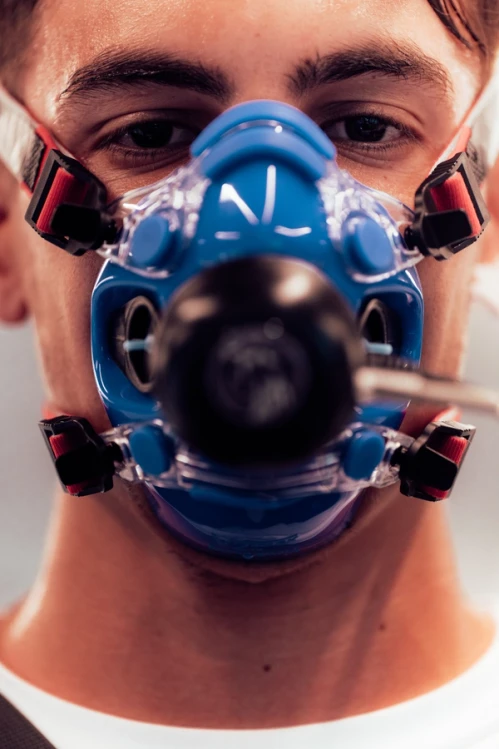
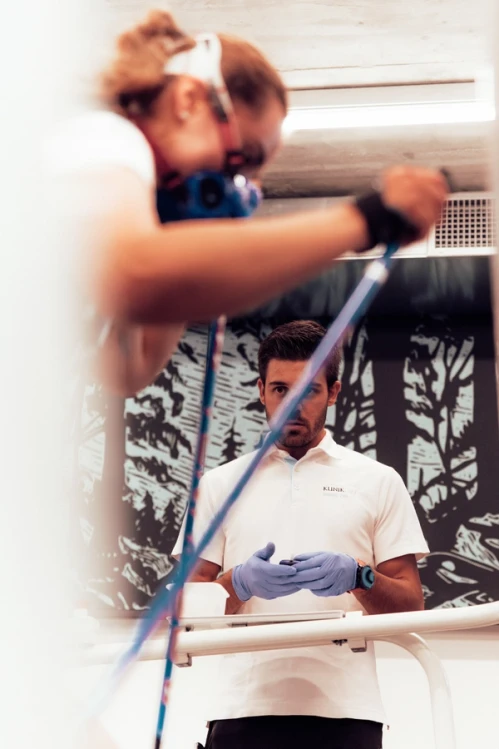
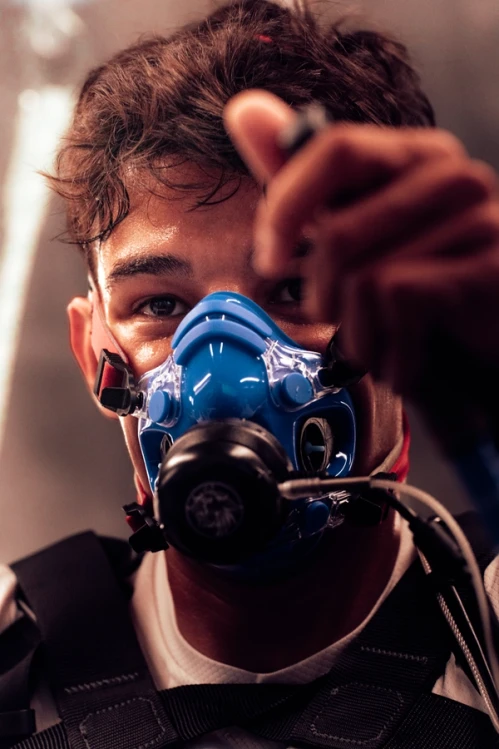
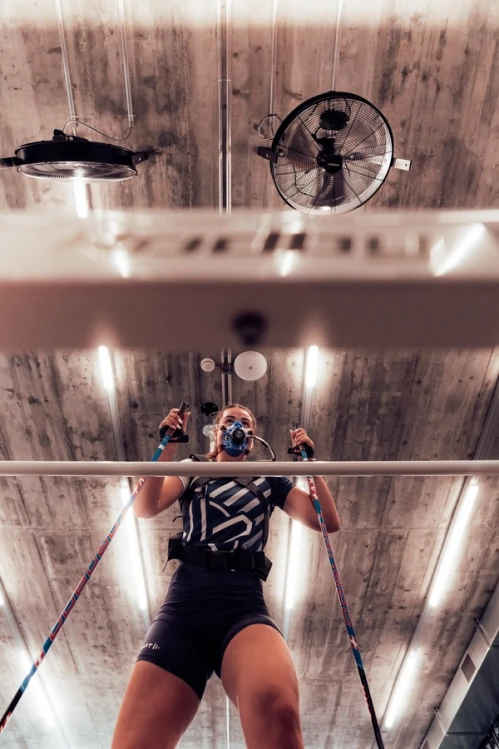
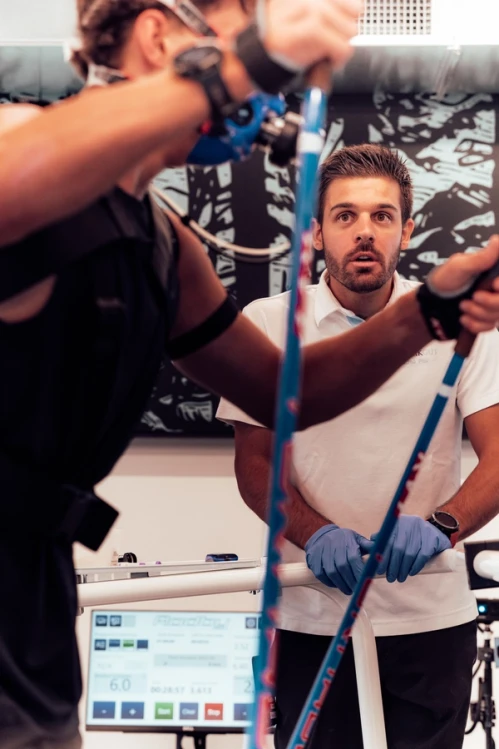
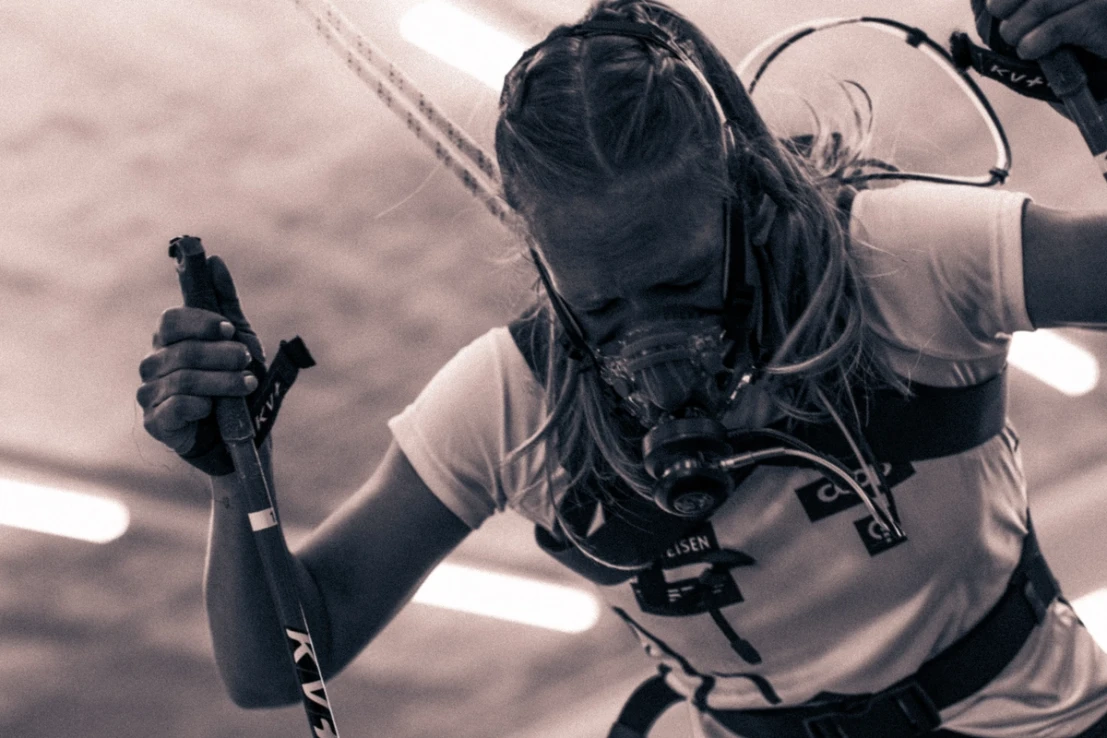
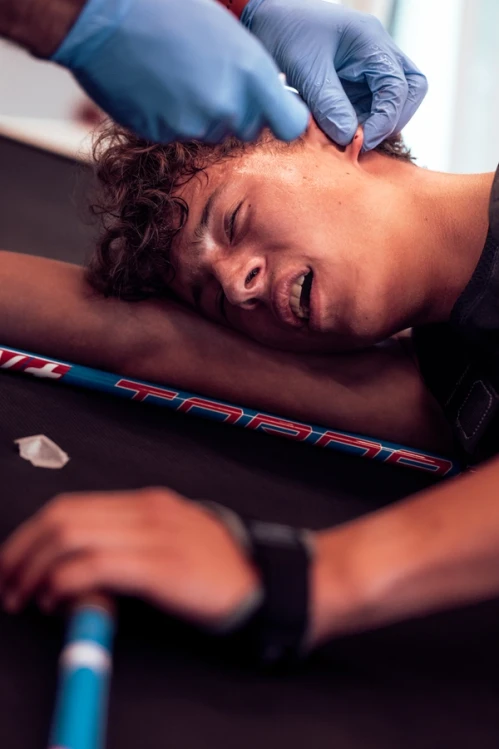
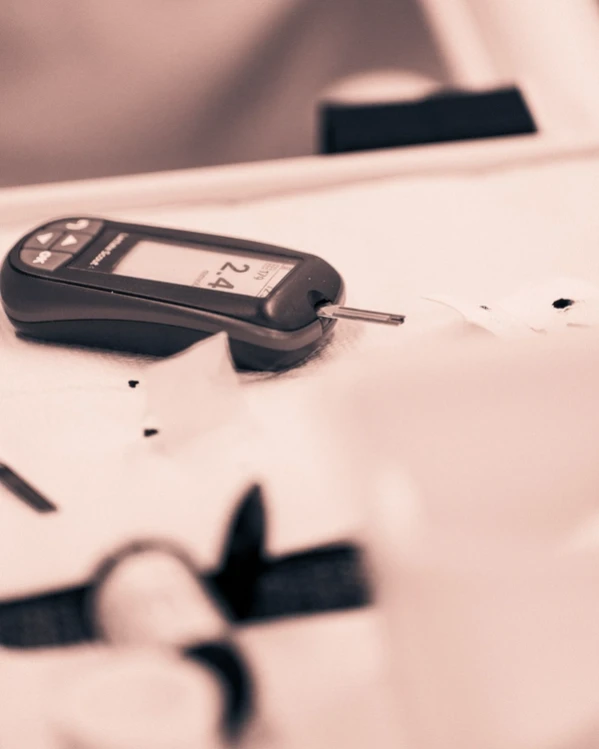
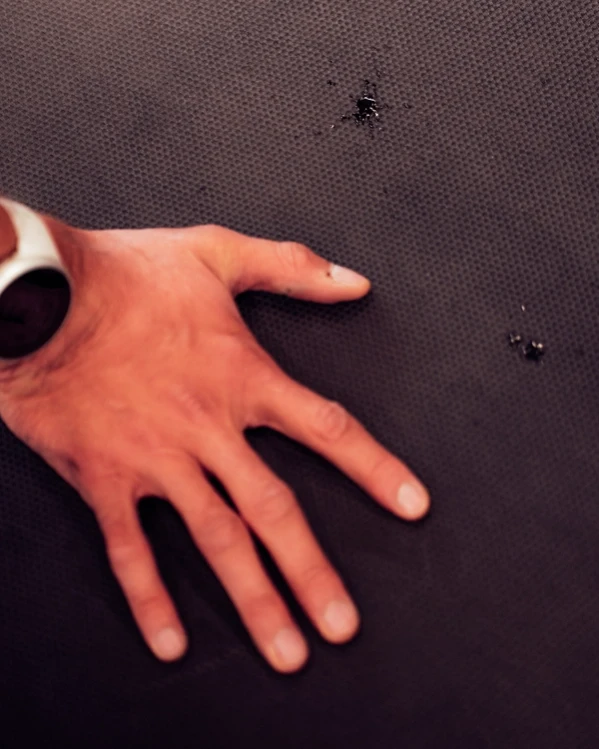
Exactly. The athletes put on their roller skis and a mobile VO2max device, which is worn like a backpack and connected to a breathing mask. There's also a safety harness that stops the treadmill immediately if someone falls. We gradually increase the intensity in four-minute stages, with a one-minute break between them. Heart rate is monitored continuously throughout the test. During each break, we take a tiny blood sample from the earlobe, record the heart rate reached at the end of the previous stage and ask how hard the effort felt.
How far do you push them?
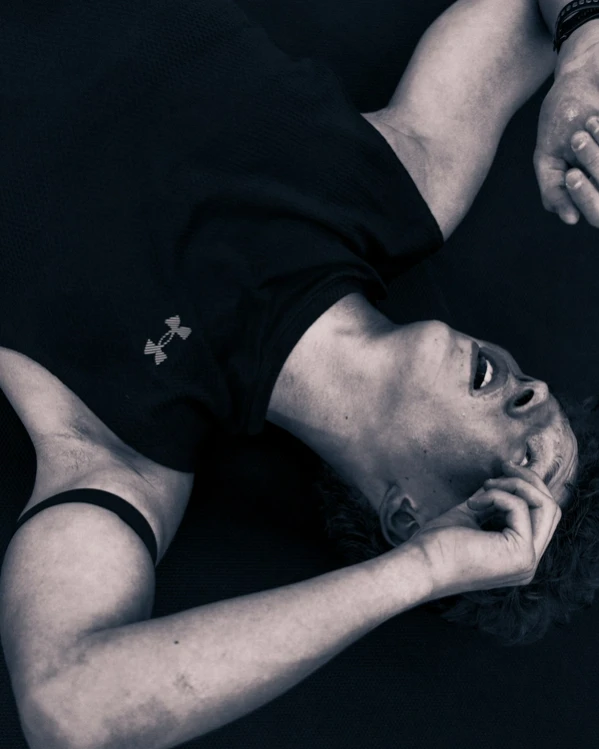
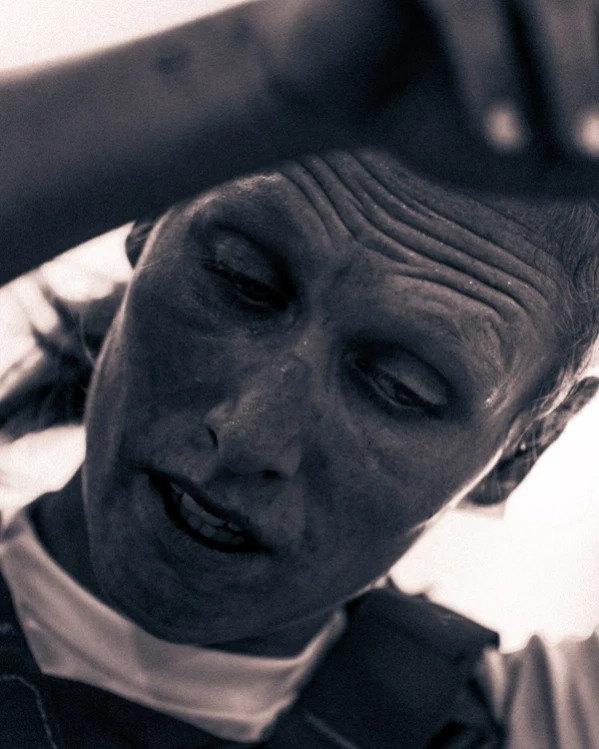
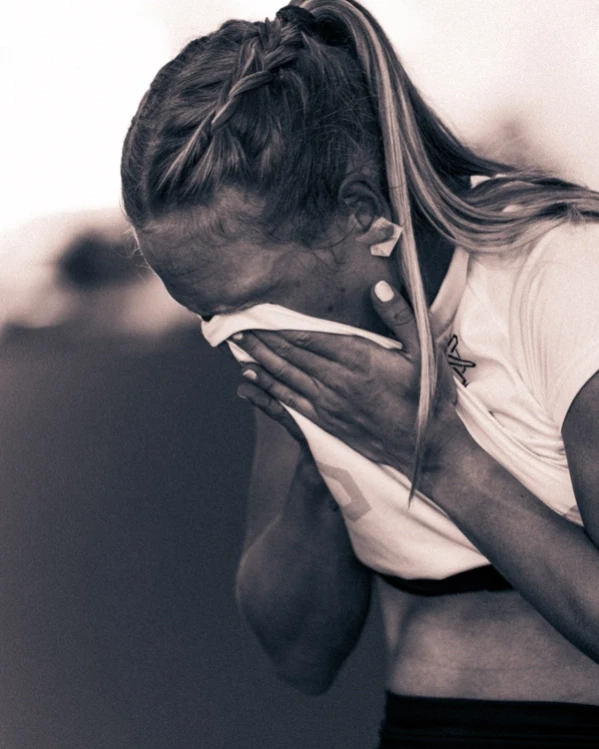
To their limit! First we increase the incline, then the speed. At the beginning, it looks quite easy. But after 35 to 40 minutes, they're completely exhausted. The test is specific to cross-country skiing and follows a protocol comparable to Swiss-Ski's. That means the results can be compared if an athlete later progresses to the national team.
So the athlete is exhausted, but your work is only beginning?
Pretty much. The test itself is relatively quick. Analysing the results takes much longer, particularly when we compare them with previous tests to see how someone has developed. We then define individual training zones, usually based on heart rate. These can be loaded directly onto a sports watch. Depending on the sport, we can also establish zones based on running pace or cycling power in watts.
And how long are those results useful?
If you train systematically, your thresholds can change within three to six months. That's generally a good interval for repeating a test. Professional athletes sometimes test more frequently. But it's important to remember that a test is a snapshot, not a verdict. If someone has a bad day, the results may not reflect their usual performance.
You see the Engadin Nordic athletes twice a year. Why June and October?
We work with around 20 athletes, mostly between 15 and 24 years old, and each round takes three full days. June is the more comprehensive assessment, including sports medicine examinations including women specific questionnaires, blood tests and physiotherapy screening for strength, mobility and stability. In October, we repeat the blood tests and performance diagnostics. It's good timing because the competition season starts in December. If something needs improving, the coaches still have time to adjust the training.
Can these tests also help prevent injuries?
To some extent. The physiotherapy screening can reveal weaknesses in strength or stability that athletes can work on. And by establishing the right training zones, we can help athletes manage their workload and reduce the risk of overtraining.
We're sitting here at more than 1,800 metres above sea level. What difference does that make?
Altitude is one of the reasons athletes come to St. Moritz for training camps. They might spend two or three weeks here adapting to the conditions. One possible adaptation is an increase in red blood cells and haemoglobin, which carry oxygen around the body. This can contribute to better endurance performance.
But how do you know whether an altitude training camp has actually worked?
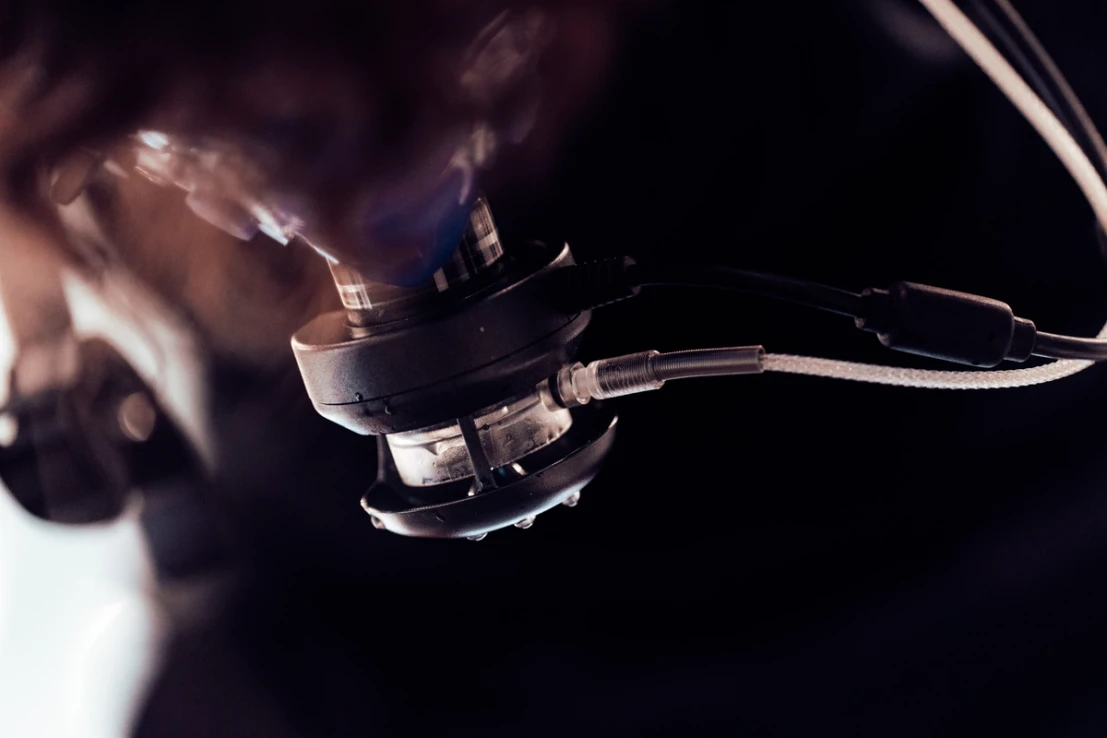
We have recently acquired a device that measures total haemoglobin mass. It uses a method called carbon monoxide rebreathing. Under carefully controlled conditions, the athlete breathes a very small amount of carbon monoxide mixed with oxygen for a few minutes. By comparing blood samples taken before and afterwards, we can determine their haemoglobin mass and total blood volume.
And what does that tell you?
We can test athletes at the beginning and end of their training camp to see whether their haemoglobin mass has increased. That gives us a measurable indication of how their body has adapted to the altitude. The advantage is that we can do this right here, where they're training, rather than sending them to a laboratory in the lowlands.
Could performance diagnostics also be useful beyond competitive sport?
For sure! In other regions, forestry workers and border guards undergo fitness assessments. Here, I could imagine similar applications for first responders who live and work at altitude. The underlying idea is the same: understanding physical capacity and using that knowledge appropriately.
Finally, winter is approaching. What's your most important piece of advice for someone who wants to improve their fitness?
Give your body enough time to recover, and stay focused on your goal. If your aerobic base isn't where it should be, now is the time to work on it. The important thing is to understand where you stand and train accordingly, using the cold weather to build strength, reduce injury risk and improve overall fitness. But most importantly, have fun and stay active! If you're curious about your own performance, just come and see us. You certainly don't have to be a professional athlete to benefit from a test.
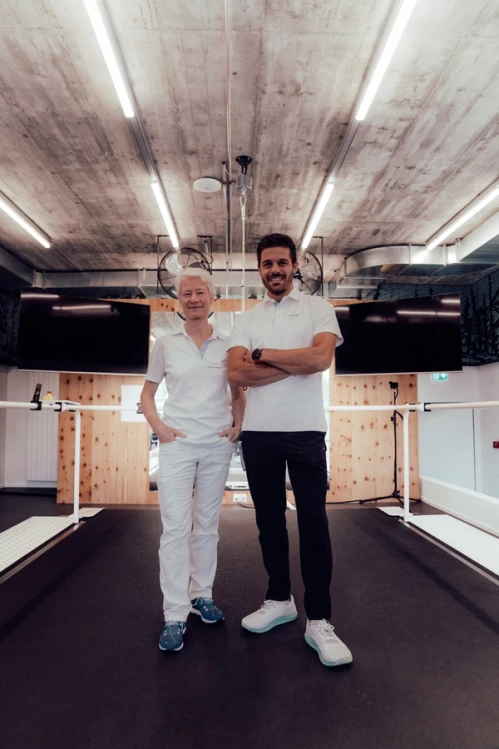
Matteo Pini at a glance
Matteo Pini (28) was born and raised in the Engadin and lives in Samedan. He holds a bachelor's degree from the Swiss Federal Institute of Sport in Magglingen and an MSc in Sports Sciences from the University of Fribourg.
Originally interested in becoming a sports teacher, he discovered his passion for physiology during his studies. Ironically, he had spent around six years doing very little sport himself, largely because of his daily commute between Samedan and school at the Hochalpines Institut Ftan (HIF).
An internship in Davos eventually led him to Klinik Gut St. Moritz, where he works as a sports scientist. Among his mentors is cardiologist and sports medicine specialist Prof. Dr. med. Dagmar Keller Lang, who also supports the clinic's more extensive athlete examinations. The team also includes Dr. med. Alexander Delvendahl and sports physiotherapists. Together, they form Klinik Gut's Swiss Olympic-recognised Sport Medical Base.
Further information & appointments
Klinik Gut St. Moritz
+41 81 836 34 34
m.pini@klinik-gut.ch
www.klinik-gut.ch
Amusements on the Lake 2027 – Ice skating, international sporting events and a variety of food and drink on frozen Lake St. Moritz, from mid-January to late February.•Segantini Meets Kiefer: Four monumental mountain paintings by Anselm Kiefer in dialogue with Giovanni Segantini. From 10 December 2026 to 20 April 2027 at the Segantini Museum St. Moritz.•Paris has a new fragrance. And St. Moritz takes centre stage: PARIS–ST. MORITZ by CHANEL.•Discover Top Tipz 3.0 – the locally curated guide to the best of St. Moritz.•