I Want to See My Mountains
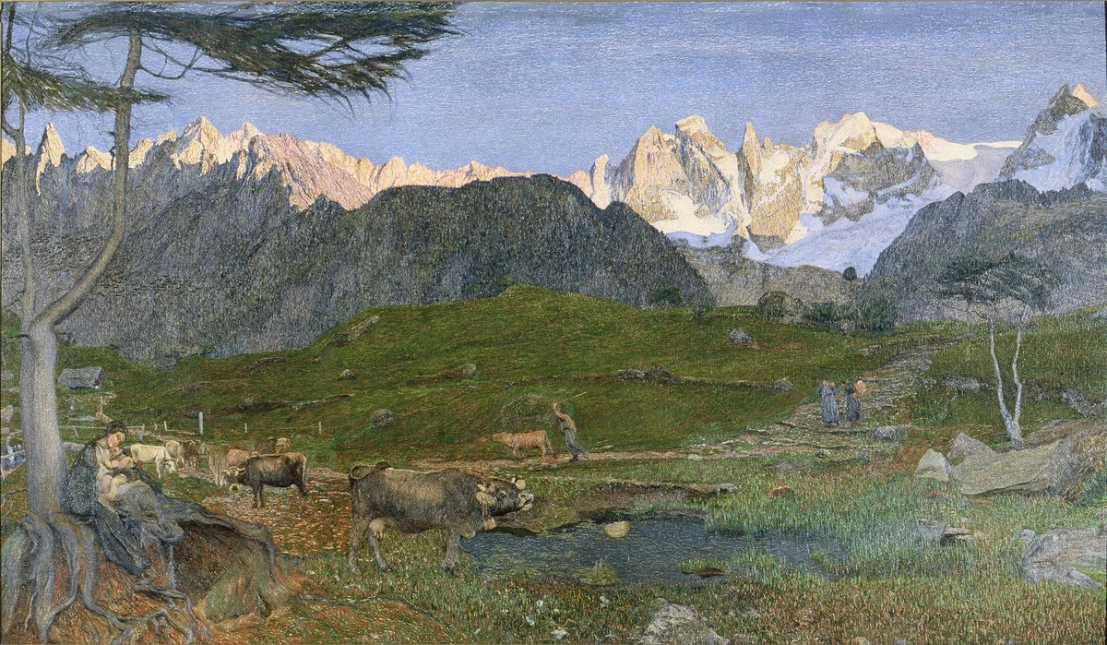
Giovanni Segantini
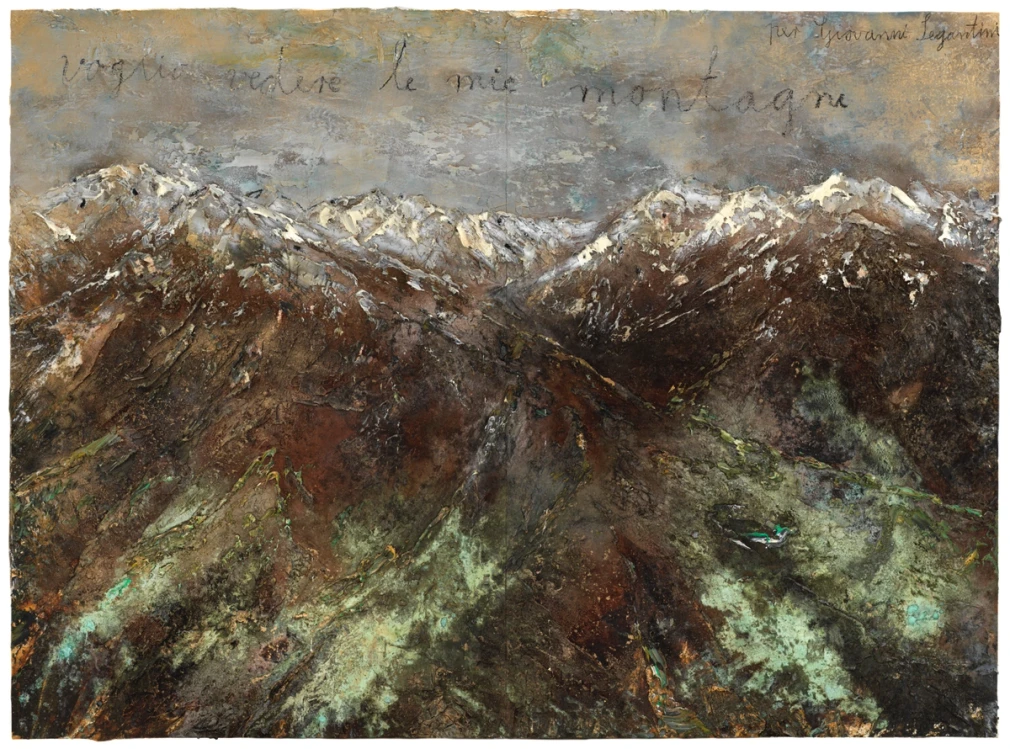
«Anselm Kiefer, ANKI-386, Voglio vedere le mie montagne»
Giovanni Segantini
«Anselm Kiefer, ANKI-386, Voglio vedere le mie montagne»
Giovanni Segantini
«Anselm Kiefer, ANKI-386, Voglio vedere le mie montagne»
In September 1899, Giovanni Segantini was working high on the Schafberg above Pontresina on his monumental Alpine triptych. It was there that the painter fell seriously ill and died on 28 September, aged just 41. “Voglio vedere le mie montagne” – “I want to see my mountains” – are said to have been his final words. The phrase speaks of his deep attachment to the Alpine landscape and would occupy another artist more than a century later.
Segantini had spent the final thirteen years of his life in Graubünden, first in Savognin and later in the Upper Engadin. Here he painted the works that made him one of the most important innovators of Alpine painting. Yet his mountains were never merely landscape. Nature became the setting for the great themes of human existence: birth, motherhood, work, death and the idea of an all-encompassing harmony between humanity and nature.
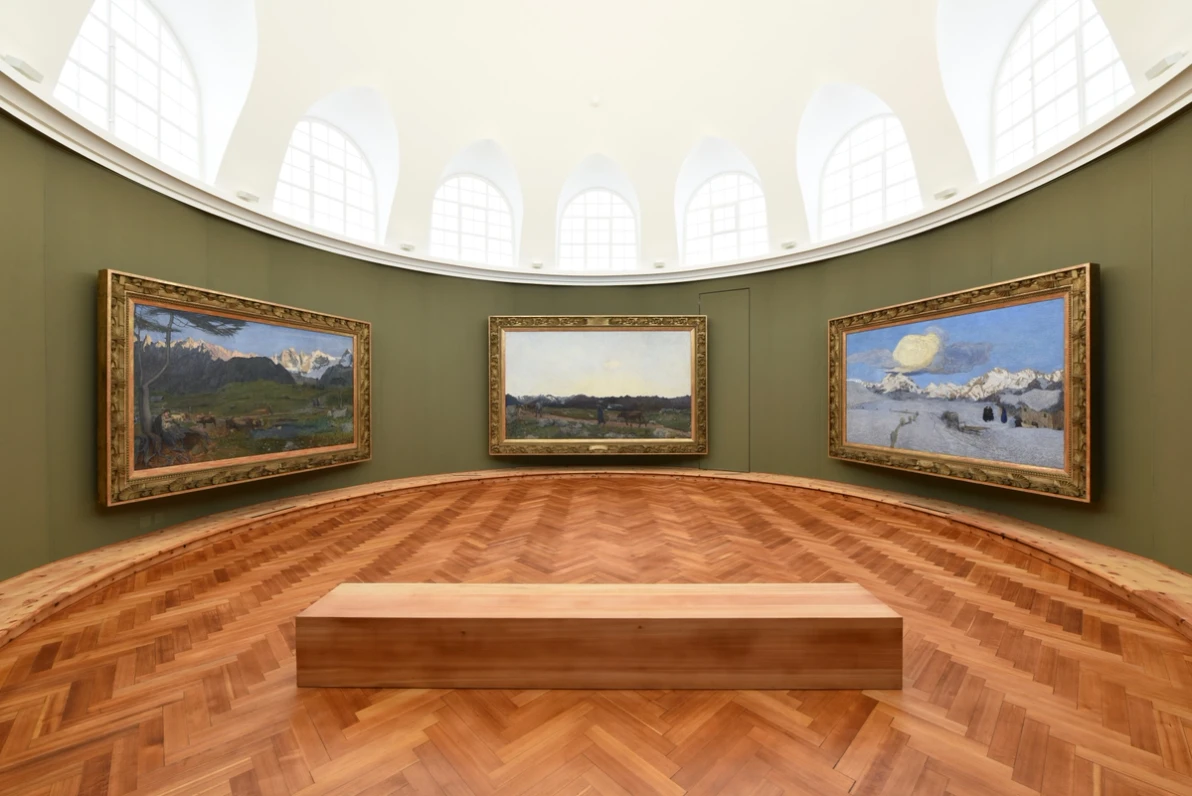
Perhaps the most powerful expression of this vision is the Alpine triptych “La vita – La natura – La morte”, now on view at the Segantini Museum St. Moritz.
Mountains That Do Not Exist
Anselm Kiefer’s mountains are not depictions of identifiable peaks. Rather, his landscapes seem to emerge from the artistic process itself. Born in 1945, the German painter and sculptor is among the most internationally significant artists working today. His monumental works explore history, memory, mythology and the contradictions of human existence. Nature, too, plays a central role in his art.
Kiefer works with a variety of materials, often revisits paintings over many years and sometimes exposes them to the elements. His unconventional techniques include working with a soldering iron and using electrochemical processes. Surfaces change, materials react with one another, and old paintings become new landscapes.
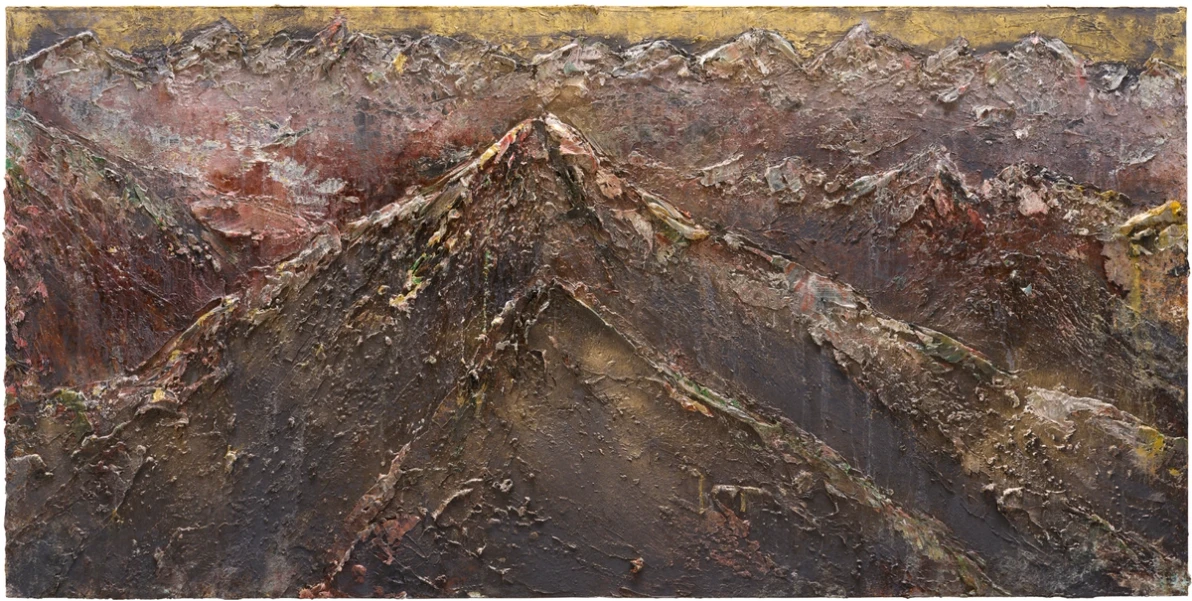
In a 2023 letter to his long-standing gallerist Lia Rumma, Kiefer explained that he never considers his paintings truly finished. He takes them out again years later to continue working on them.
Whereas Segantini sought an overarching harmony in nature, Kiefer’s landscapes depict a world in constant flux, endlessly reshaping itself. Despite these differences, both artists share a conviction that the visible natural world is more than simply a subject.
A Phrase That Lives On
Intriguingly, Kiefer was not the first artist to be drawn to Segantini’s last words. In 1971, Joseph Beuys created an installation referring to the same phrase. Kiefer met Beuys during his formative years at the Düsseldorf Academy and still regards him as an important mentor. He continues this artistic dialogue in his own way. On several of his mountain paintings, the Italian words even appear in his own handwriting.
The special exhibition “... le mie montagne” at the Segantini Museum St. Moritz brings together four large-scale works from Kiefer’s series of the same name with Segantini’s Alpine landscapes. The artists’ works were created more than a century apart, yet they raise similar questions: What do we see when we look at a landscape? And what lies beyond the visible?
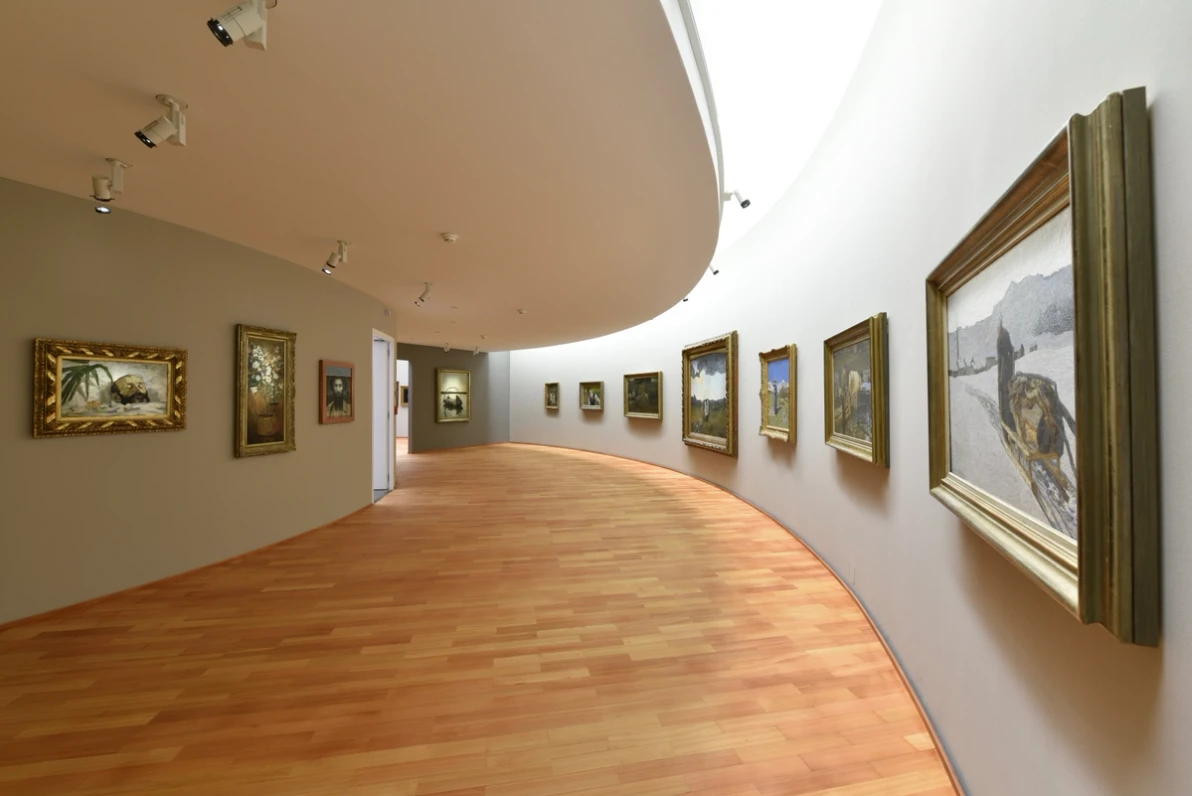
The museum, opened in 1908 as a memorial to Segantini, offers a particularly fitting setting for this encounter. It houses some of his most important paintings, including the famous Alpine triptych. Kiefer’s monumental mountain landscapes now join them, offering a new perspective on the work of the artist to whom the museum is dedicated.
That Segantini’s last wish should have become the starting point for a new artistic dialogue is one of the most compelling ideas behind this exhibition. His mountains remain. And they still invite us to look a little closer.
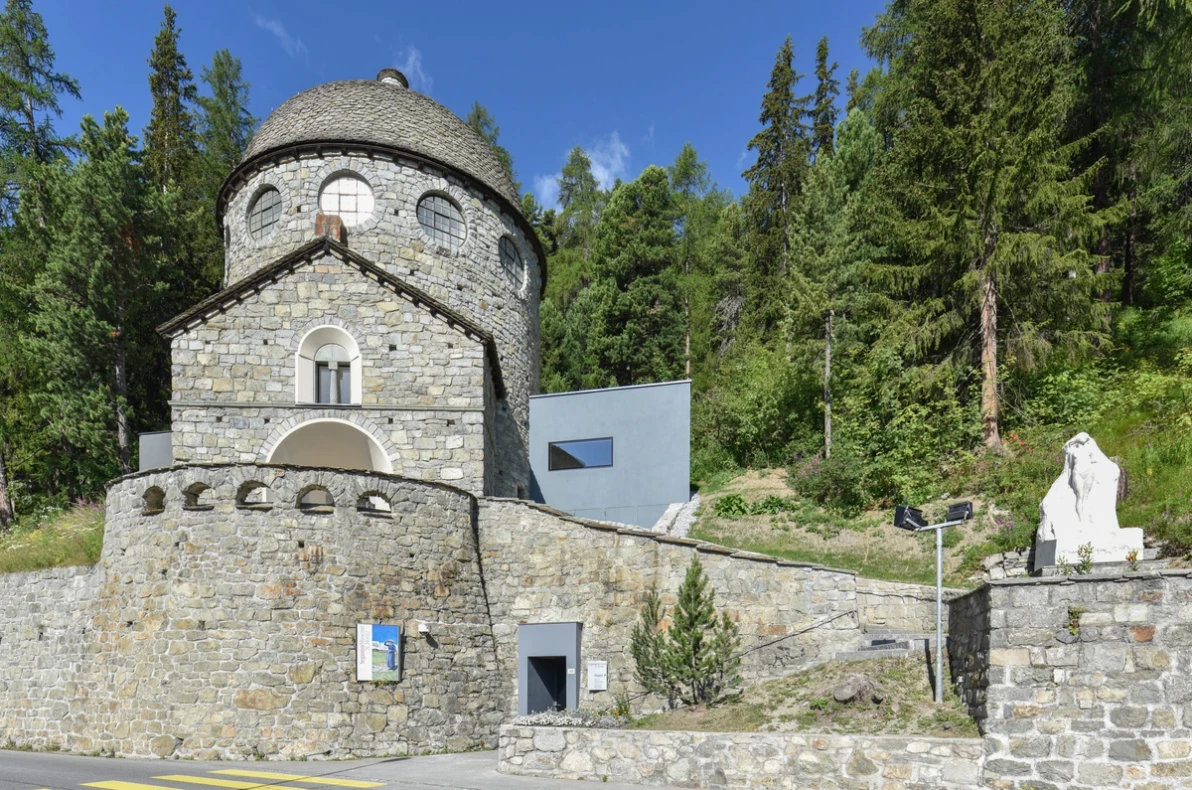
«... le mie montagne» – Giovanni Segantini and Anselm Kiefer
Thursday 10 December 2026 to Tuesday 20 April 2027
Segantini Museum St. Moritz
Via Somplaz 30
7500 St. Moritz
Tuesday to Sunday, 11 am–5 pm. Closed on Mondays.
Further information: Segantini Museum
Amusements on the Lake 2027 – Ice skating, international sporting events and a variety of food and drink on frozen Lake St. Moritz, from mid-January to late February.•Segantini Meets Kiefer: Four monumental mountain paintings by Anselm Kiefer in dialogue with Giovanni Segantini. From 10 December 2026 to 20 April 2027 at the Segantini Museum St. Moritz.•Paris has a new fragrance. And St. Moritz takes centre stage: PARIS–ST. MORITZ by CHANEL.•Discover Top Tipz 3.0 – the locally curated guide to the best of St. Moritz.•